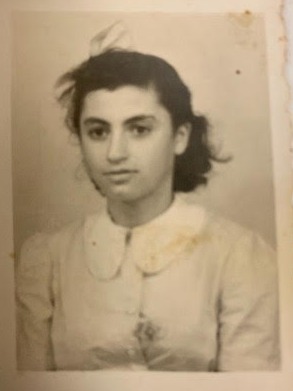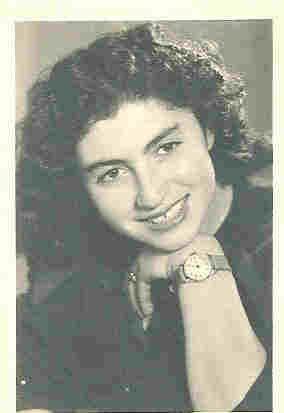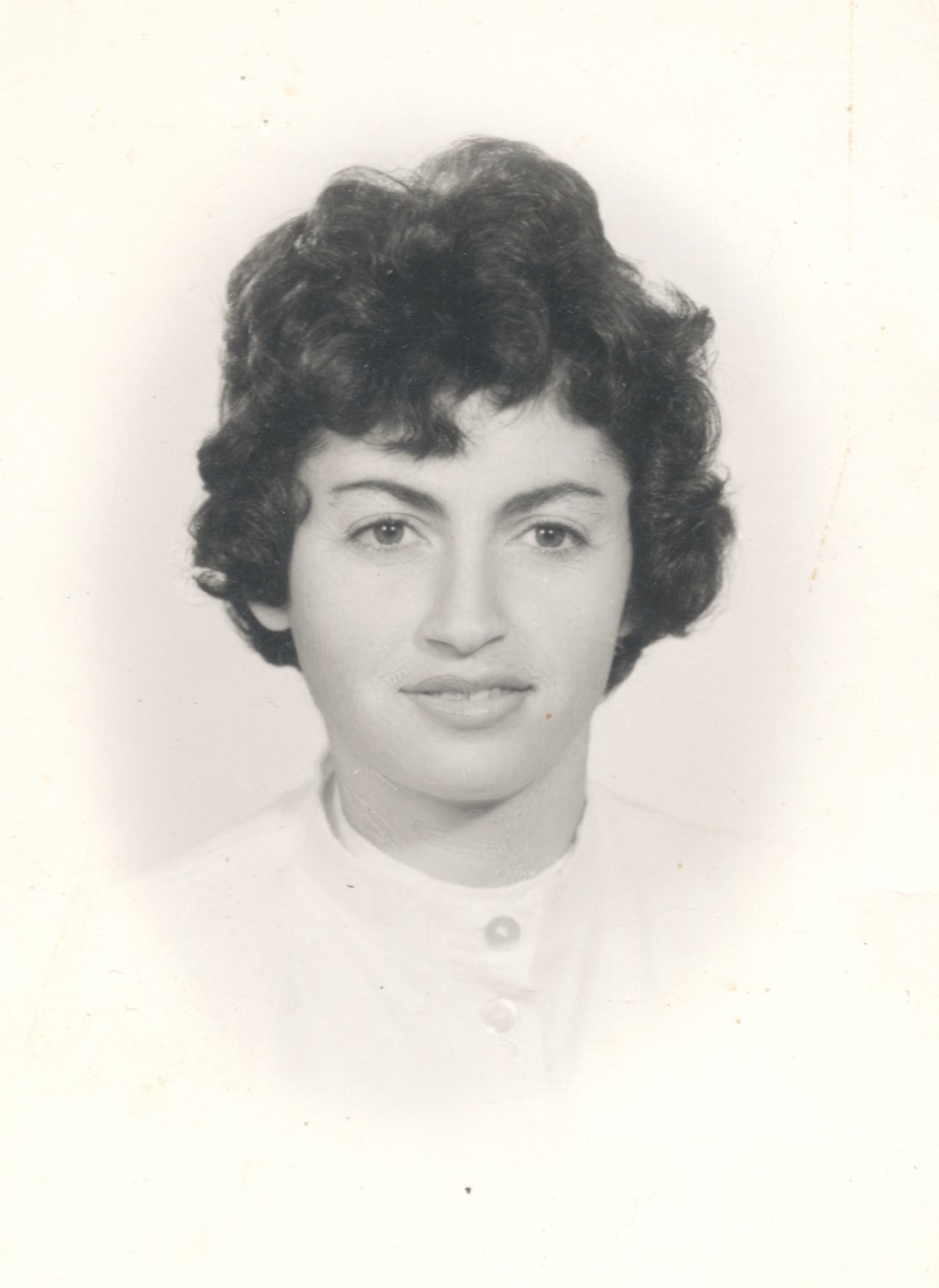
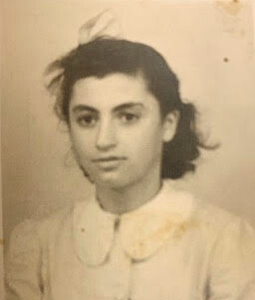
It was 1941 when the Germans occupied seven-year-old Riva Schuster’s village. Forewarned by a gentile friend of approaching danger, Riva’s parents fled with their children through the forest toward their grandparents’ home in Chotin. They never made it. They were captured, marched to Sukarein, and forced into cattle cars headed for a camp in Moghilev, on the border between the Soviet Republic of Ukraine and the Romanian province of Bessarabia.
Thrown from the train, separated from her parents and two brothers, Riva was ferried across the Dniester River to a camp in Luchinetz. She arrived hungry; stricken with malaria, typhus, and lice; her feet frozen and bleeding. At the camp, she saw her mother again and witnessed her being beaten with a rifle while trying to keep the Germans from taking her husband away.
One night partisans rescued some of the girls. Riva was instructed to “play dead,” and was placed in a wagon of hay and taken to a Catholic convent in Tulchin. For two years, she remained alone in a six-foot, square bunker with rats and mice her only company, eating bread and pork provided by the nuns every few days. Her only comfort was a blanket that was used for “everything.”
In 1945, at the age of twelve, Riva was liberated. She was suffering from malaria and typhus and had lost all her teeth. The nuns carried her weak body to the road and left her there. Picked up by some other survivors on the road, she was taken to Chernovitz, where she was handed over to the Red Cross. One miraculous day, her father appeared, although she could hardly recognize him. He had been captured and placed in a work camp, from which he had run away, only to be captured again. In time, they managed to find her mother and two brothers.
In 1946, Riva’s boat to Palestine was captured by the English. The passengers were sent to a refugee camp in Cyprus, where Riva remained for two more years. Riva finally arrived in Israel in 1948 and was reunited with her family. She was now fifteen.
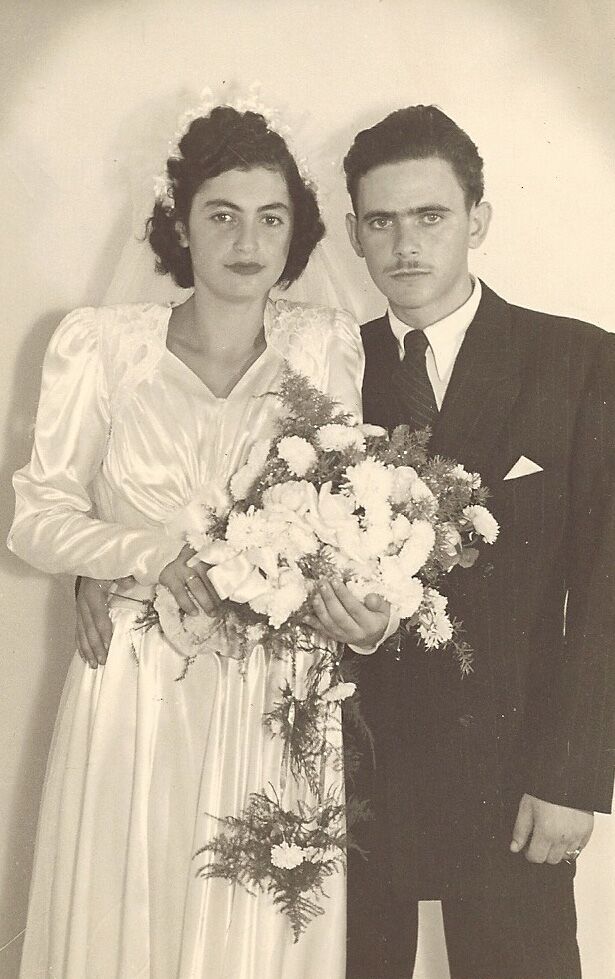
In Israel, Riva met her husband, Aisic Hirsch, also a survivor. They married in 1950 and had two children. In 1962, Riva and Aisic moved to New York. In 1992, they moved to Birmingham to be closer to their two children and four grandchildren.
Click on any image below to enlarge and view captions.
All photos on this website are the property of the Alabama Holocaust Education Center archive. Please contact us for permission before using or sharing any images.
08/09/1933
Novaseletz
Also: Novoselytsia, Novosedlice, Novoselytsya, Noua Sulitsa, Novoselitsa
(Today in Ukraine)
Feige (Faga) Goldie Liebes
(06/28/1902 Novaseletz, Romania – 12/1981 Lakewood, NJ)
Josef (Josel) Aaron Schuster
(11/20/1897 Russia – 02/14/1981 Lakewood, NJ)
Came to US in 1964, lived in New York then New Jersey
Itzhak (“Izzie”) Schuster (Spouse: Mina Blumer)
(08/10/1931 Novaseletz, Romania – 12/26/1990 Toms River, NJ)
Moved to Israel in 1948. Moved to Lakewood, NJ in 1970.
Mordechai (Mordka, Marc) Szuster (Schuster)
(1936 Novaseletz, Romania – ? Long Island, NY)
To US 1951
Aisic Hirsch
(08/15/1930 Mogielnica, Poland – 03/07/2014 Birmingham)
Married 1950 in Israel
Chaim (Harold) Hirsch (Spouse: Felice Levine)
(1955 Haifa, Israel – 2008 Charleston, SC)
Shulamit (Sheryl) Hirsch (Spouse: Jay Perlstein)
(1958 Haifa, Israel)
1990-
Chotin (Alt: Khotyn), Romania
(circa July 1941)
Secureni (Alt: Sukarein), Bessarabia
Moghilev-Podolski, Transnistria
Luchinetz (Alt: Luchinets, Luchynets, Lucinet), Transnistria
Convent in Tul’chin (Alt: Tulchin, Tulchine), Ukraine
(1943-1944)
Russians / March 1944 / Convent in Tul’chin
After the War:
Riva travelled from Hertsa, Ukraine to Burgas, Bulgaria where in 1946, she boarded a ship for Palestine; the ship was diverted to Cypress where Riva was held until May 1948, when at the age of 15, Riva was allowed to travel on to Palestine.
Max Hirsch, Aisic’s uncle from Charleston, SC
1990-
AHEC Darkness into Life Exhibit