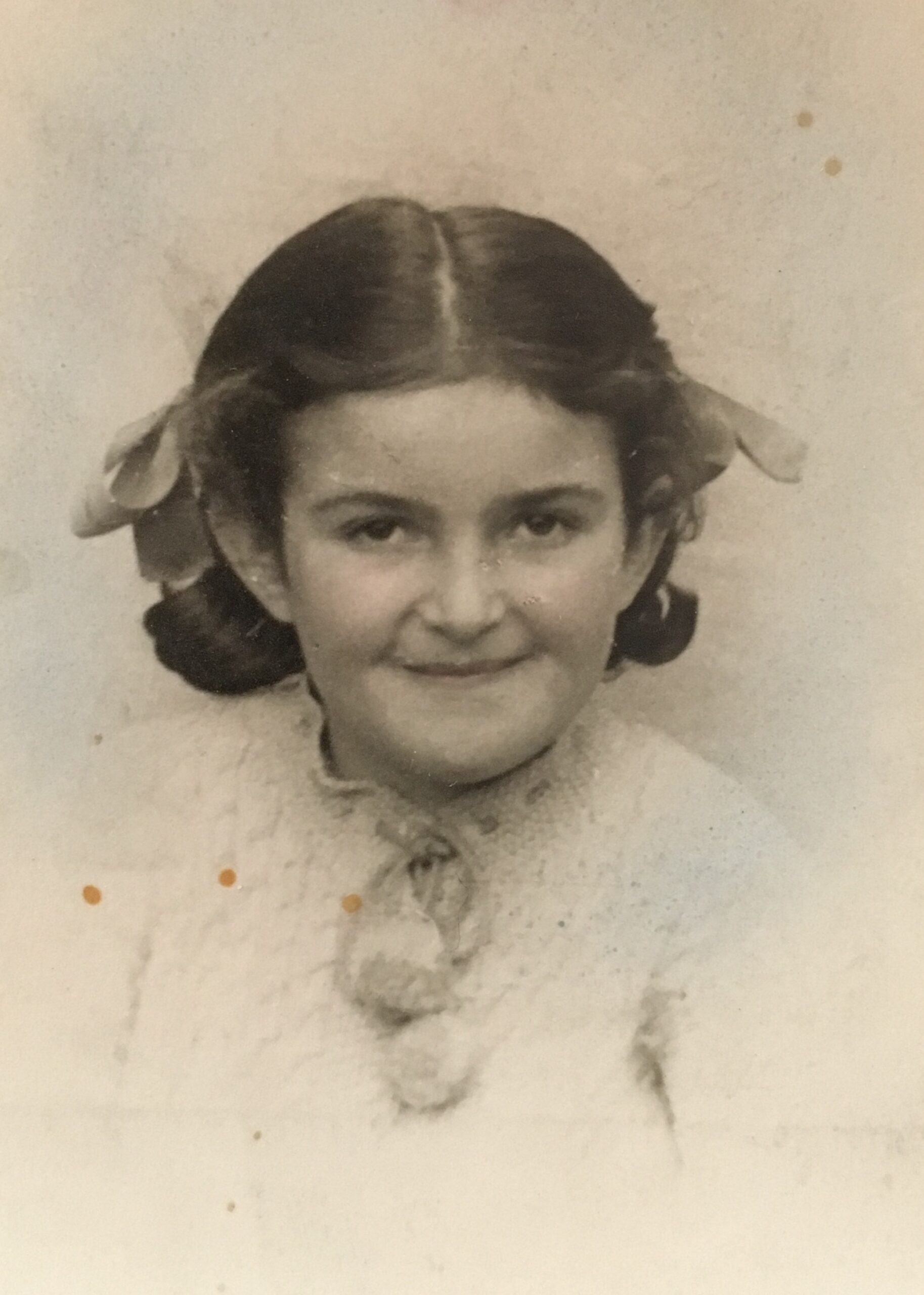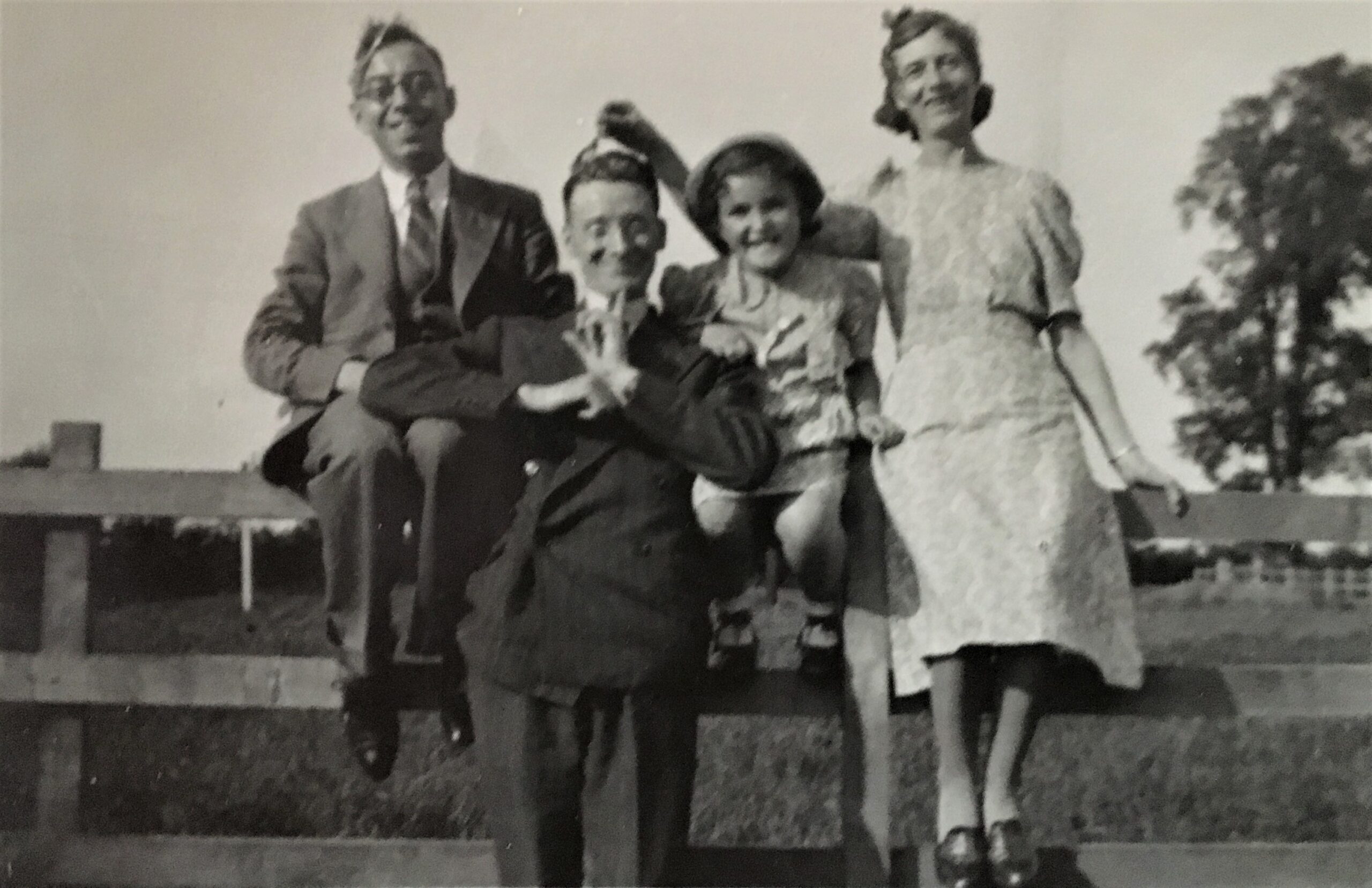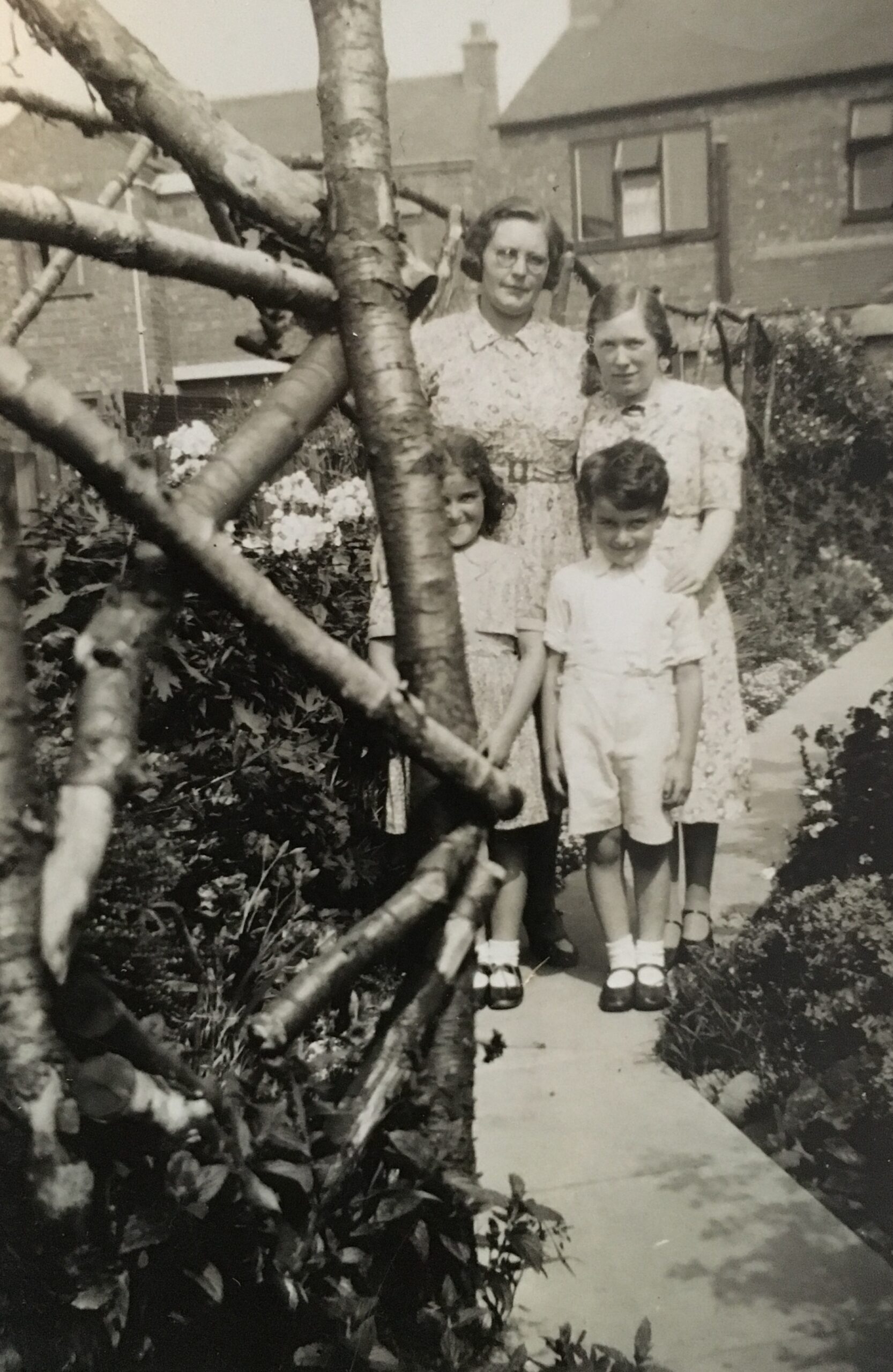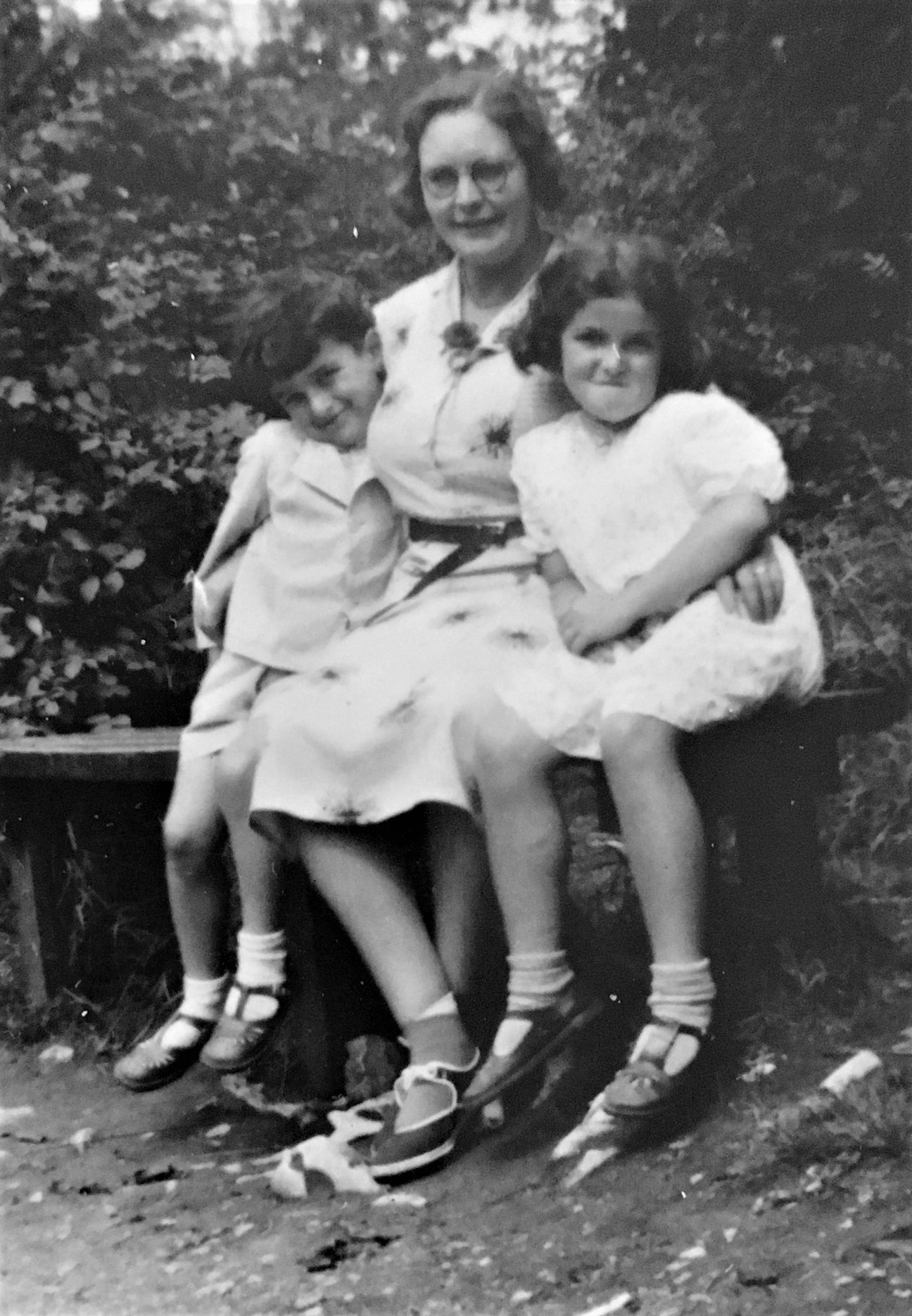
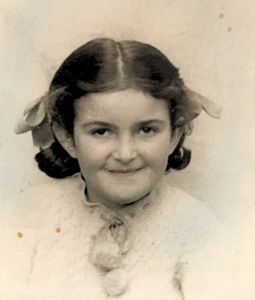
Rita Billig was born on March 18, 1933, the first child of Abisch and Gusti Billig. The Billigs lived in Alsergrund, a predominantly Jewish district in Vienna, in an apartment overlooking a canal off the Danube River. Rita recalled Vienna as being peaceful and filled with beauty. Sadly, that peace was quickly extinguished by the Nazis, who invaded Austria in 1938.
The Nazi invasion began on March 12, only a week short of Rita’s fifth birthday. Tragedy ensued eight months later on Kristallnacht, when Abisch was arrested by the Gestapo and their family synagogue was burned to the ground. By some miracle, Abisch was not taken to a concentration camp, but was released and told to vacate Austria immediately. He made plans to illegally migrate to Switzerland, where he would settle down and send for his family. But the Swiss had other plans. In order to keep the peace with the Germans, they set up internment camps for Jews in their own country. Abisch was held prisoner in a labor camp in Switzerland until 1947 when he was finally released.
A few months after Kristallnacht, Rita and Ernst boarded a Kindertransport train to Coventry, England. Their mother was too frail to accompany them to the station. At the time, unbeknownst to Rita, her mother was dying of metastatic breast cancer. She passed away in 1940. The last memory Rita has of her mother was being clutched to her chest while she begged Rita never to leave her younger brother.
When Rita and Ernst arrived in Coventry, they were placed in Christadelphian homes. The Christadelphians were a religious group that believed in Jewish law. Many of the community dedicated much of their time to helping those of the Jewish faith escape tyranny in Europe. Rita went to live with Harry and Freda Morgan, a young couple with no children. Ernst moved in with Harold and Marjorie Moore. Thankfully, much to Rita’s relief, she would still be able to visit with her brother weekly. Thus, her promise to her mother was not broken.
Rita had nothing but fond memories of the Morgans. They treated her like their own, at times even giving her their portions during strict rationing. Rita emphasized that the Morgans never forced their beliefs onto her. In fact, to some degree, Rita and Ernst both were encouraged to nourish their Jewish identities. Rita described the Morgans as “”wonderful, wonderful people.” So, when her time with the Morgans came to a close, Rita was devastated, describing her departure as having to “leave everything I had grown to love.”
In the meantime, Rita’s paternal aunt and uncle, Nesche and Philip Schattner, had finally made it to Birmingham, Alabama after their own ordeal leaving Vienna. Abe Berkowitz, Nesche’s attorney, arranged for Ernst and Rita’s immigration so that the family could finally be reunited. Soon after, Ernst and Rita made the trip to the United States by boat. Sadly, Rita’s disappointment followed her to Birmingham. She was more than grateful for the generosity of her aunt and uncle, but she was horrified by the conditions in Alabama. Not only was it an unbearably hot summer with no air conditioning, but the windows had to stay closed due to the raging polio epidemic. Rita was also particularly shaken by the prejudice that people in Alabama displayed, and she had a difficult time adjusting to all of these changes, especially as a young girl who was just entering her teens.
While Rita and Ernst tried to make sense of their new home, Abisch Billig was being released from internment in Switzerland and was on his way to see his children. During his entire journey, he was wracked with nerves thinking about what to say to his dear children. But when he arrived in Birmingham, his emotions got the best of him, and all he could do was hold them and weep.
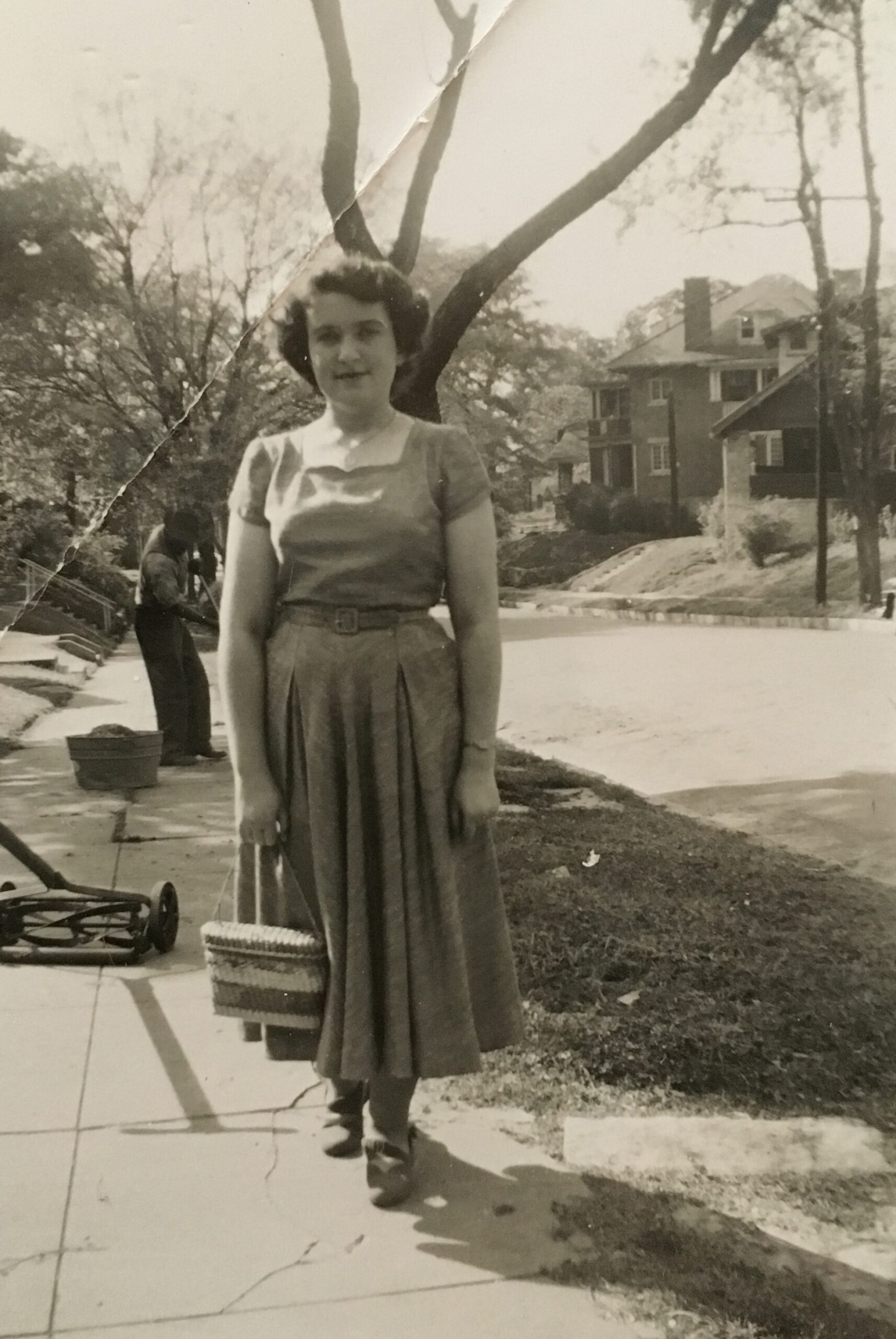
Rita knew that her father’s arrival was her ticket out of Birmingham. After all, he only planned to stay for a few months before moving to New York. She followed him there, initially living with a friend, then moving in with Abisch and his new wife, Martha Hanfling. She graduated from Erasmus Hall High School in Brooklyn in 1950.
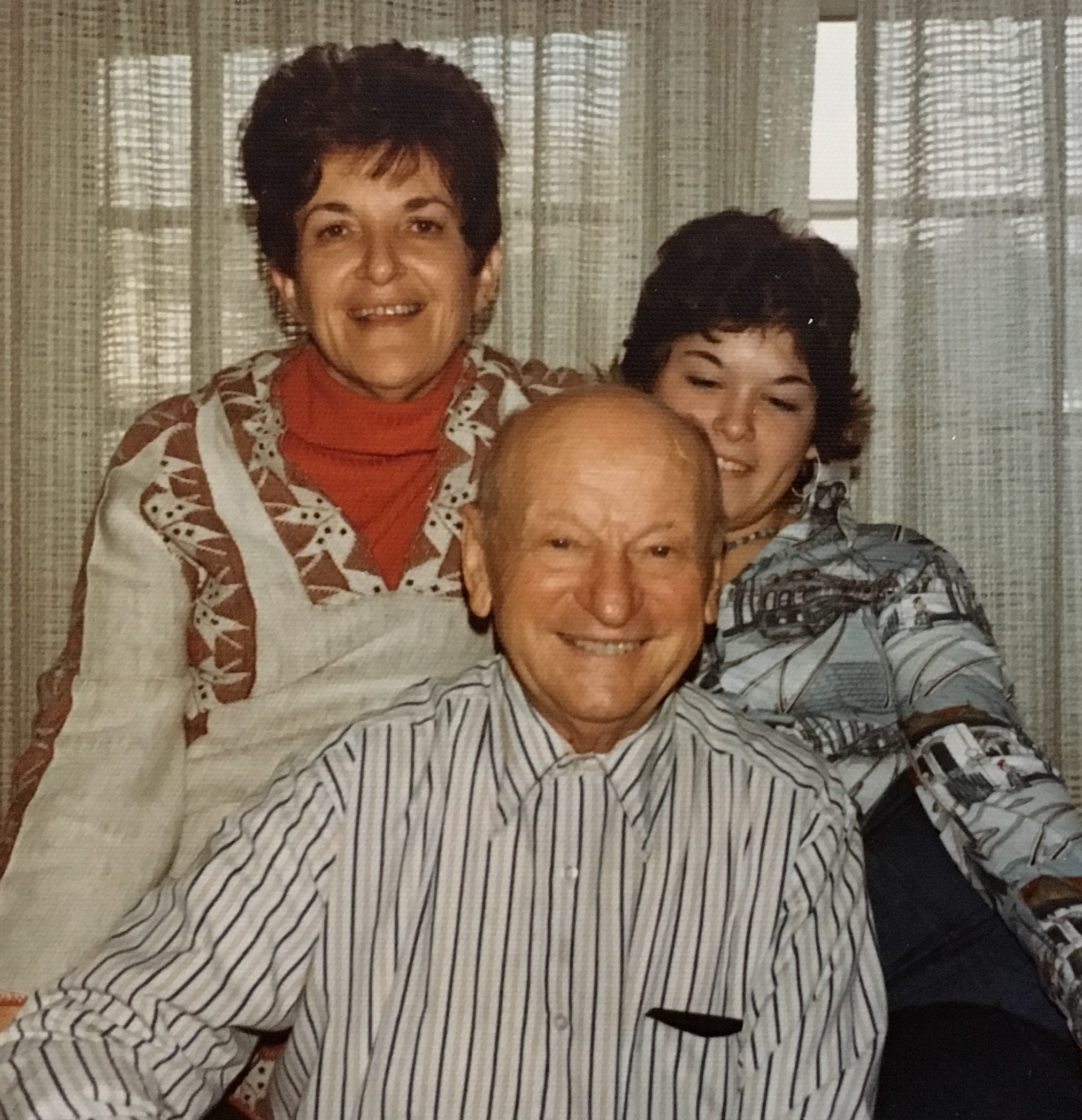
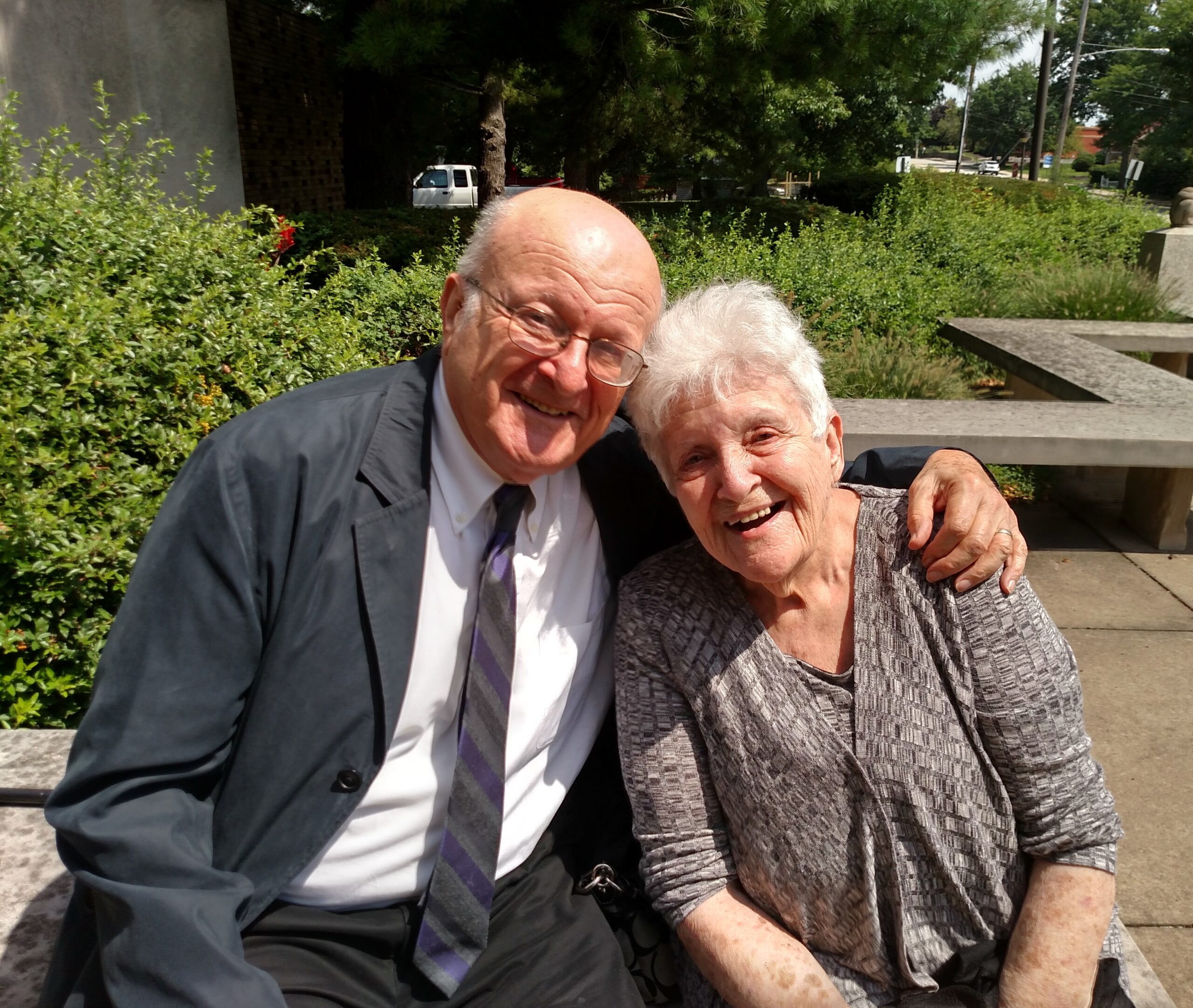
Rita eventually married William Glanz, who was also a Jewish refugee that had fled the Nazis. They settled down in Old Bridge, New Jersey and had two children, Jeffrey and Gina. Towards the end of her life, Rita was afflicted with Alzheimer’s and therefore had trouble remembering certain things about her life. The part that stood out the most prominently in her mind was the kindness of Harry and Freda Morgan. Rita passed away in Grand Rapids, Michigan on September 23, 2020.
Click on any image below to enlarge and view captions.
All photos on this website are the property of the Alabama Holocaust Education Center archive. Please contact us for permission before using or sharing any images.
03/18/1933
Vienna
Cheine Gittel “Gusti” Silber
(1895 Brody – 1940 Vienna)
Abisch (Adolf) Billig
(1892 Brody – 1981 New York, NY)
Married 1931, Vienna
William “Bill” Glanz
(1921 Rostock, Germany – 2008)
Jeffrey “Jeff” Glanz (Spouse: Jill Owen)
(Born 1958 Old Bridge, NJ)
Gina Robin Glanz (Spouse: Lawrency “Larry” J. Becker)
(10/11/1960 Old Bridge, NJ – 03/07/2015 New Brunswick, NJ)
1946-1948
Left Vienna July 12, 1939 with her brother, Ernst, on a British Kindertransport
Lived in Coventry then Nuneaton, England with Harry and Freda Morgan for six years
1946-1948
Part of the Family: Christadelphians, the Kindertransport, and Rescue from the Holocaust
Volume 2
by Jason Hensley
(Available in the AHEC Library)