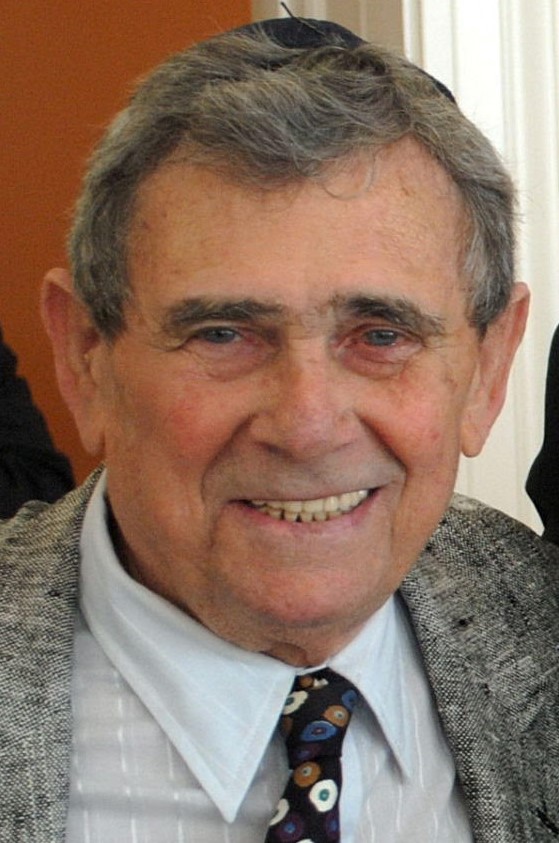
“I hope that in my generation, in the future, this should never happen in the world. It was a horrible thing, horrible experience to go through. And for what? Just being a Jew.”
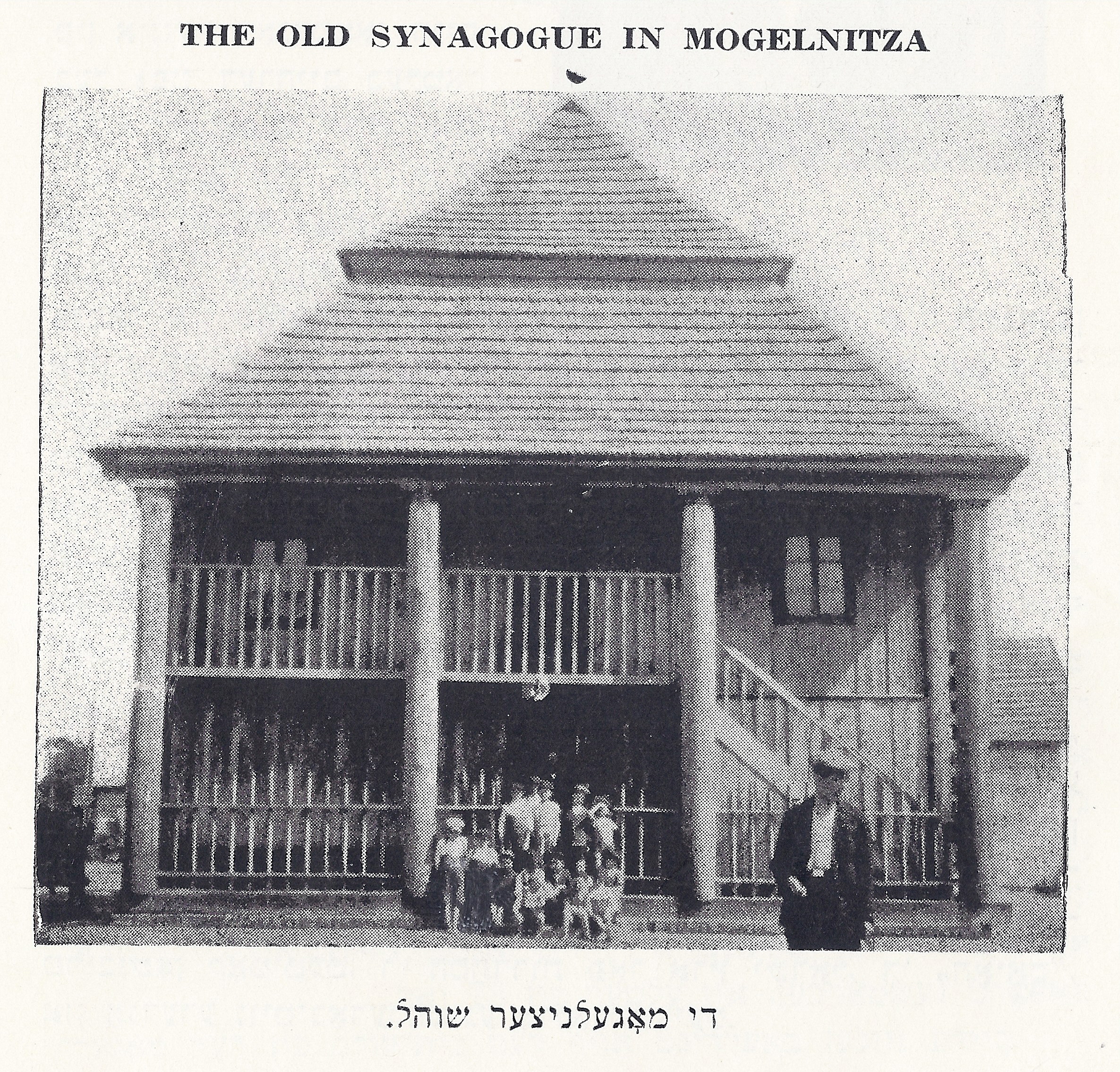
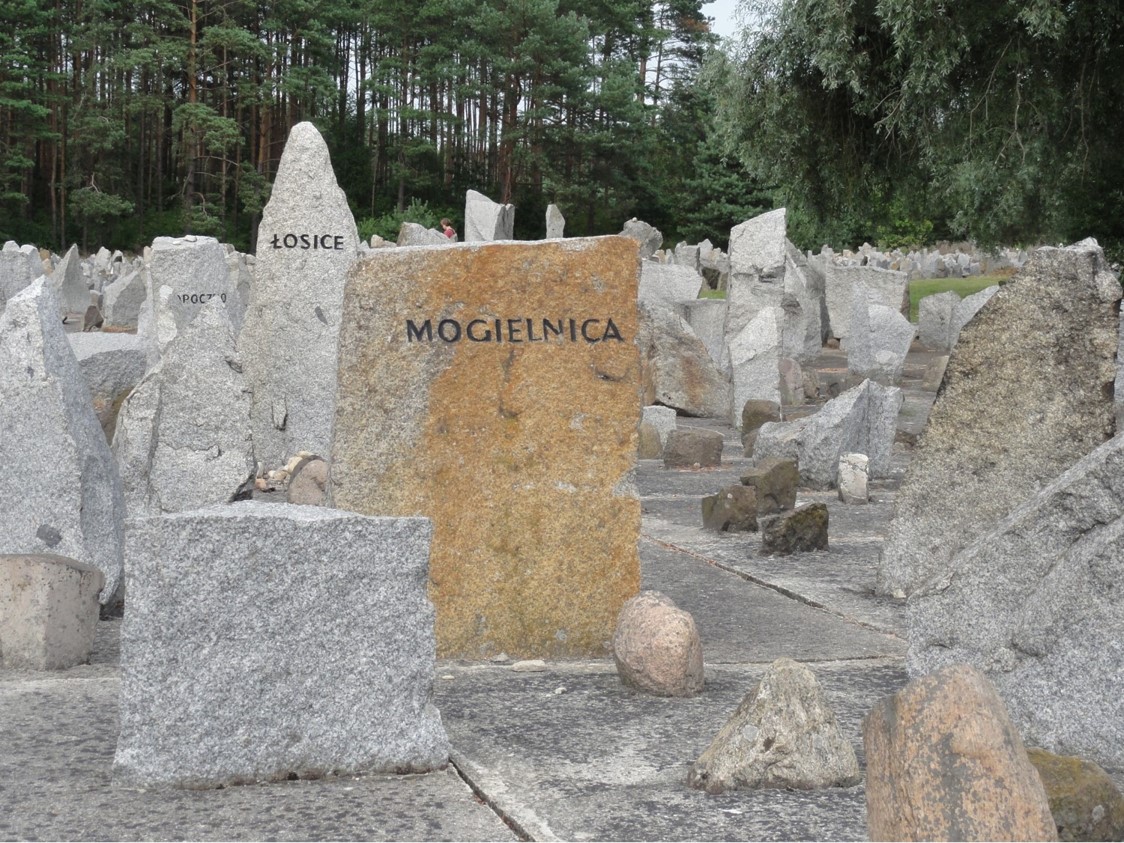
Aisic Hirsch experienced more terror and loss than any innocent child should ever have to endure. In 1939, at the age of nine, Aisic witnessed German troops invade his small Polish town of Mogielnica. They set fire to both synagogues and, assisted by Poles, publicly shamed, shot, and hung the two Hassidic rabbis. Thousands stood by and watched.
In 1941, after more than year in a local ghetto, Aisic, his mother, five-year-old brother, and grandmother were herded into the Warsaw Ghetto, the largest ghetto in Poland. There, amidst “absolute misery,” where “rats and sickness were everywhere,” he watched helplessly while his brother and grandmother died of typhus, and his mother slid into madness. Although he did not want to leave his mother, she pushed him out of the ghetto under the auspices of “Save the Children,” a Jewish organization that paid off German and Polish guards. Upon his release, the little boy was on his own.
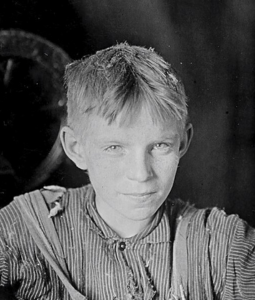
After several nights of walking, eleven-year-old Aisic was taken in by family friends who hid him briefly in their barn. Fearing German retaliation, he was told he had to leave. Aisic moved on to the village of Goszczyn, arriving on a Sunday morning. Where else does one go on Sunday mornings, but to the local church? Thanks to his blond hair and blue eyes, Aisic blended in with the congregation. It was here that he found the noblest of humanity. When Aisic knelt for confession, all he could do was cry.
The young priest, suspecting the child was a Jew, touched his head through the confessional window and said, “This world will not go on forever. It will end. One day you will find all your loved ones again.”
The clergyman gave Aisic a “real” Polish name and birth certificate and taught him Catholic prayers that would one day save his life. He helped Aisic find work on a Polish farm of a half-German woman whose two sons worked for the Gestapo. Before he got the job, he had to prove he could correctly recite his Catholic prayers. He was saved again. Aisic remained on the farm for three years until his liberation by the Russians in May 1945.
“That priest was my guardian angel. He saved my life. It is because of him that I am here today,” he says.
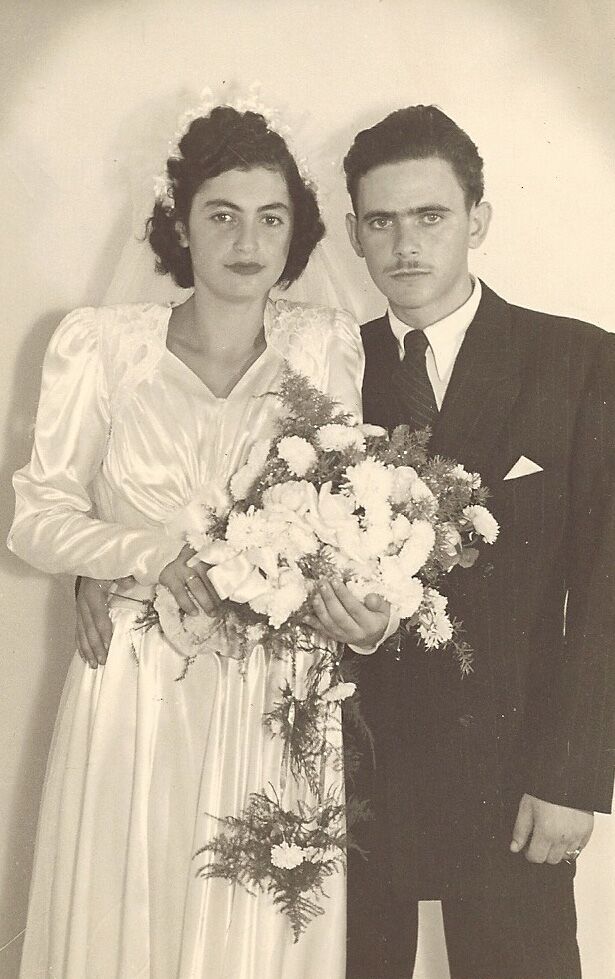
Aisic immigrated to Israel and in 1948 fought in the War of Independence. He met and married Riva Schuster in 1950. In 1962, the family of four moved to New York, and in 1992, they moved to Birmingham to be nearer their two children and four grandchildren.
Click on any image below to enlarge and view captions.
All photos on this website are the property of the Alabama Holocaust Education Center archive. Please contact us for permission before using or sharing any images.
08/15/1930
Mogielnica
Rywka (Riva) Goldberg
(1909 – 1942 Warsaw Ghetto, Poland)
Chaim Hirsz
(1902 – 1938)
Shmuel Hirsz
(1934 Mogielnica, Poland – 1942 Warsaw Ghetto, Poland)
Chaim (Harold) Hirsch (Spouse: Felice Levine)
(1955 Haifa, Israel – 2008 Charleston, SC)
Shulamit (Sheryl) Hirsch (Spouse: Jay Perlstein)
(1958 Haifa, Israel)
1990-2014
Mogielnica Ghetto
(established 1940 when Germans came in; there only a few months)
Warsaw Ghetto
(until Fall 1942)
Farm outside of Goszczyn, Poland / Circa 1942 – Winter 1945
Given the name Bronislav Porszskinsky by a Polish priest and hidden as a worker on a the Frigges family farm
Russians / Winter 1945 / Frigges family farm outside of Goszczyn, Poland
After liberation, traveled to Palestine (Haifa) on the French ship, Champollion
1990-2014
USC Shoah Foundation
Interview #17574
July 19, 1996 | Birmingham, AL
Alabama Holocaust Education Center
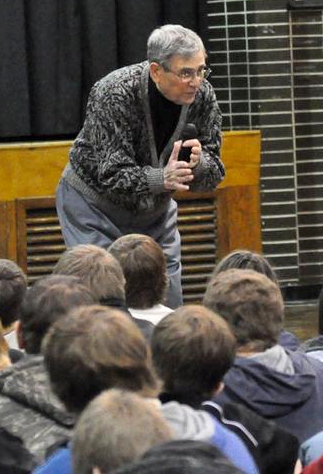
“Children of the Holocaust” (2008)
(04:29)
“Saved by a Guardian Angel: The Story of Aisic Hirsch”
Siegler Fellow, Julianne Jorgensen (2020)
(1:00:00)
AHEC Darkness into Life Exhibit