Our first touring day in Berlin was as moving and thought-provoking as I anticipated.
Our day began with a visit to the Neue Synagoge (New Synagogue) in Berlin which symbolizes the rich Jewish culture that existed before the Holocaust and the destruction of Jewish life under the Nazi regime. Although it was badly damaged on the evening of Kristallnacht, for unknown reasons, a few police and fire fighters stepped in to stop what was happening. It was a powerful reminder that even when commanded to do something wrong, individuals can choose to do what is right.
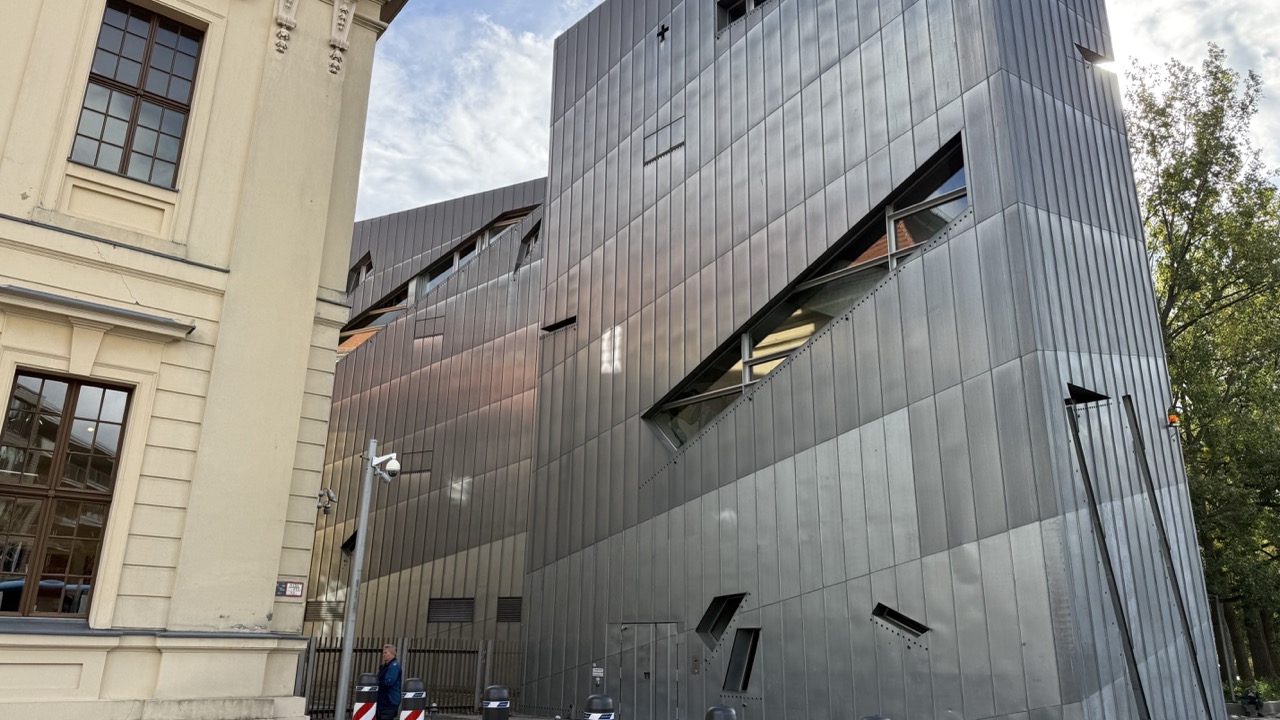
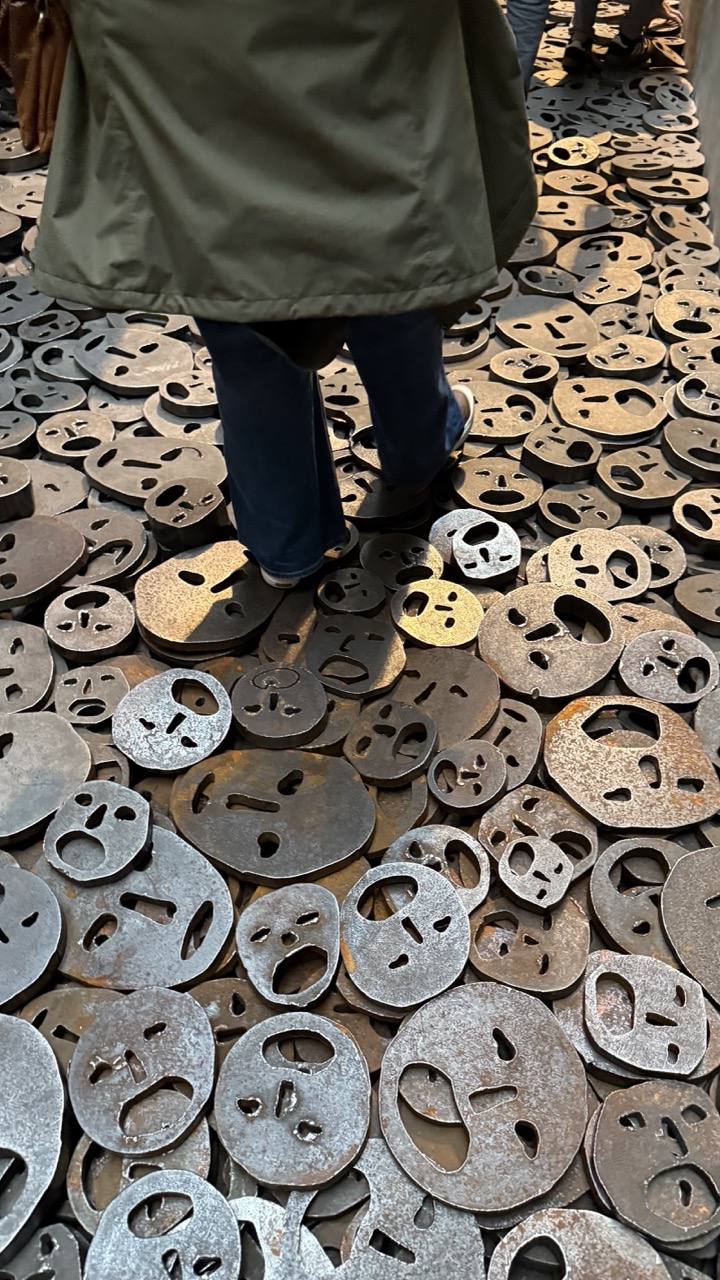
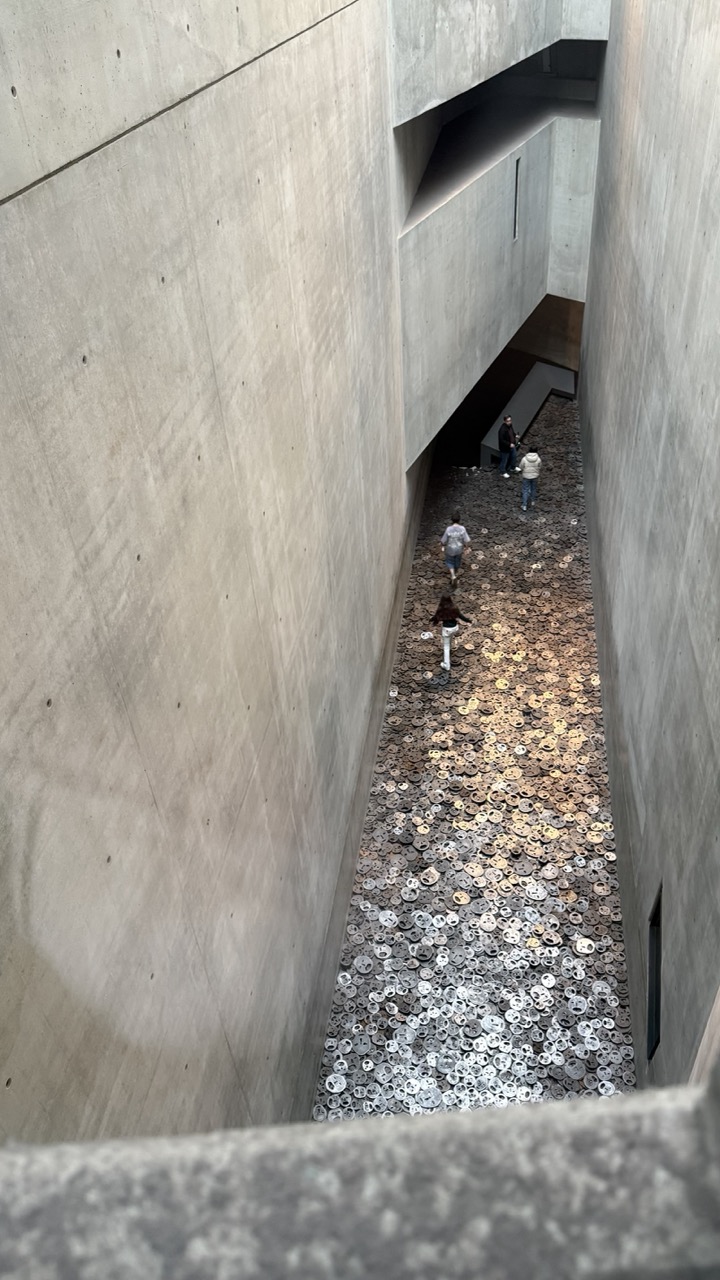
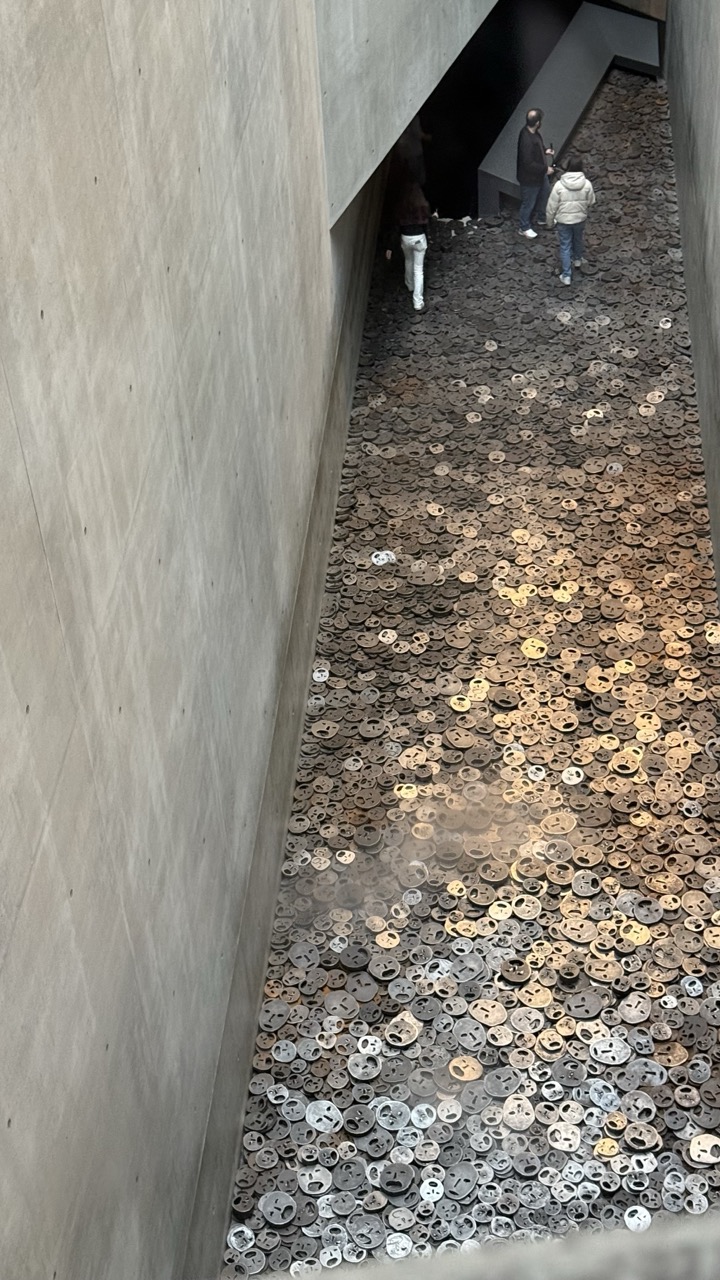
At the Jewish Museum, we experienced an exhibit called Memory Void, an installation of more than 10,000 heavy metal faces scattered across the floor. Each face was different in size, shape, and thickness, yet all shared the same haunting features: eyes, a nose, and an open mouth, as if frozen in a scream. We were invited to walk across them, and with every step, the metal shifted and scraped together, creating an eerie sound resembling cries of anguish. The narrow, uneven space made the experience even more disorienting which we learned was purposeful. I struggled with the feeling that I was stepping on the memories of those who had suffered, and that my own footsteps were causing their pain. It was deeply unsettling and emotional.
Afterward, we crowded closely together in a small circular listening room that was playing a Jewish prayer called Aveinu Malkeinu. a Jewish prayer. Julian, our guide, explained that the prayer asks God for mercy and protection and he connected it to a Hebrew phrase Tikkun Olam, means to repair the world. This is a value that guides our work at AHEC.
What stuck out to me today was the realization that doing hard things is crucial. We all want the easy way. I know I do. But maybe that is not the best way.
Too often, people hesitate to visit places of history, especially the Holocaust, because the stories are too painful. The images are too disturbing. The emotions are too difficult.
But perhaps that discomfort is exactly why we must experience them. We cannot turn away from the hardest parts of our history simply because they make us uncomfortable.
We have to be willing to sit with the pain, ask difficult questions, and confront what human beings are capable of doing. This includes both the terrible and the extraordinary, like the officers who didn’t follow the rules at the synagogue on that fateful night in 1938.
Today gave me a deeper understanding of why we do the work we do. We cannot begin to repair a broken world unless we have the understanding of what broke it.
And perhaps that is where courage begins.
If we can be willing to face what makes us uncomfortable, even when it is deeply painful, perhaps we can gain insight and courage to begin to consider the change that is necessary and make the choices that can even the tiniest bit of positive impact.