There are so many things to write about from today’s journey that I’m not quite sure where to begin.
Julian started our day by describing Berlin as a city of deep thinking. A city that has wrestled with difficult questions about what should be preserved, what should be rebuilt, and how to acknowledge a past that can never be undone.
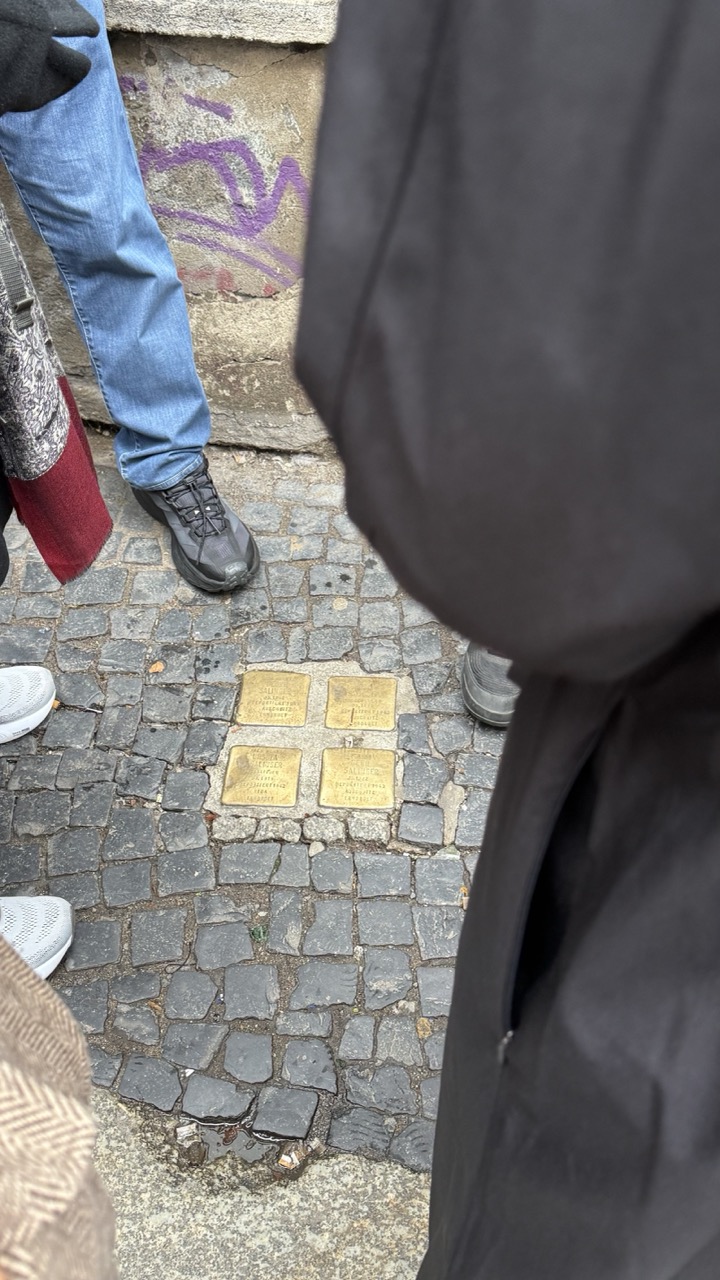
As we began walking, we happened upon some of the Stolpersteine, or Stumbling Stones. These small brass plaques are embedded in sidewalks to mark the places where Jewish people lived before losing their homes to Nazi persecution. Each one represents a person, a life, a family, and a story interrupted.
There is something incredibly powerful about having to lower your eyes to look down at the sidewalk to remember someone history tried to erase.
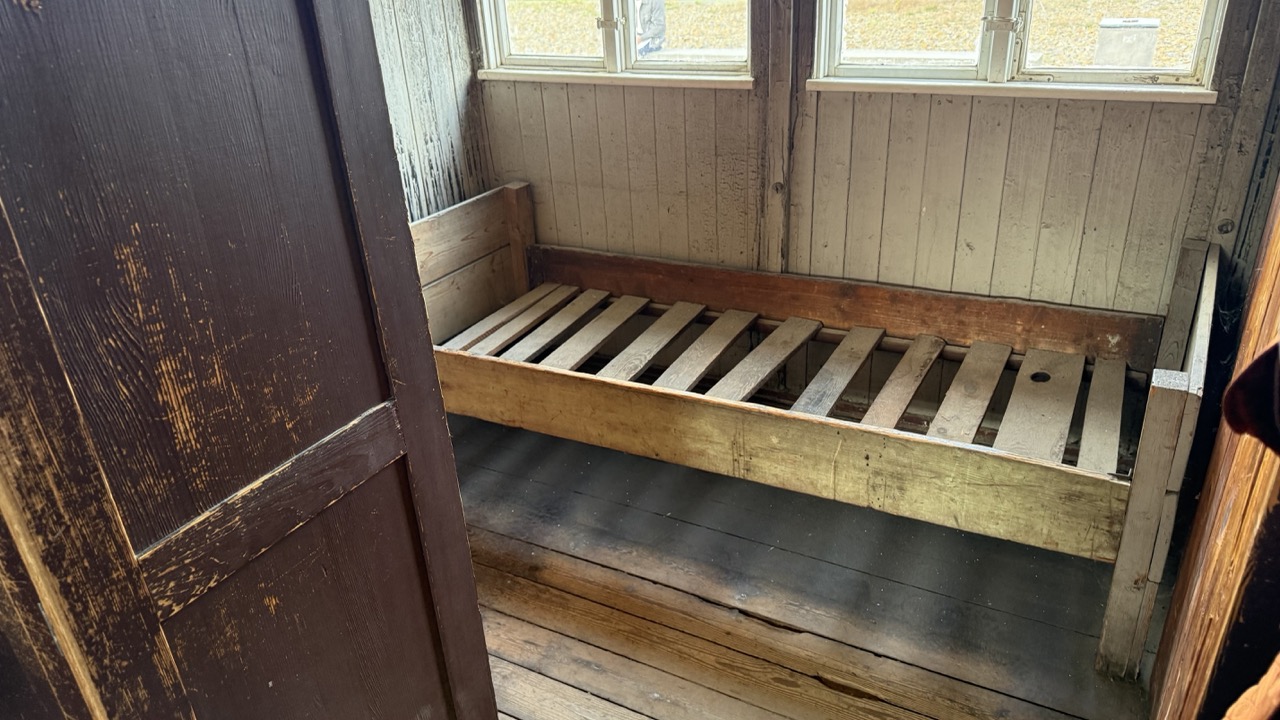
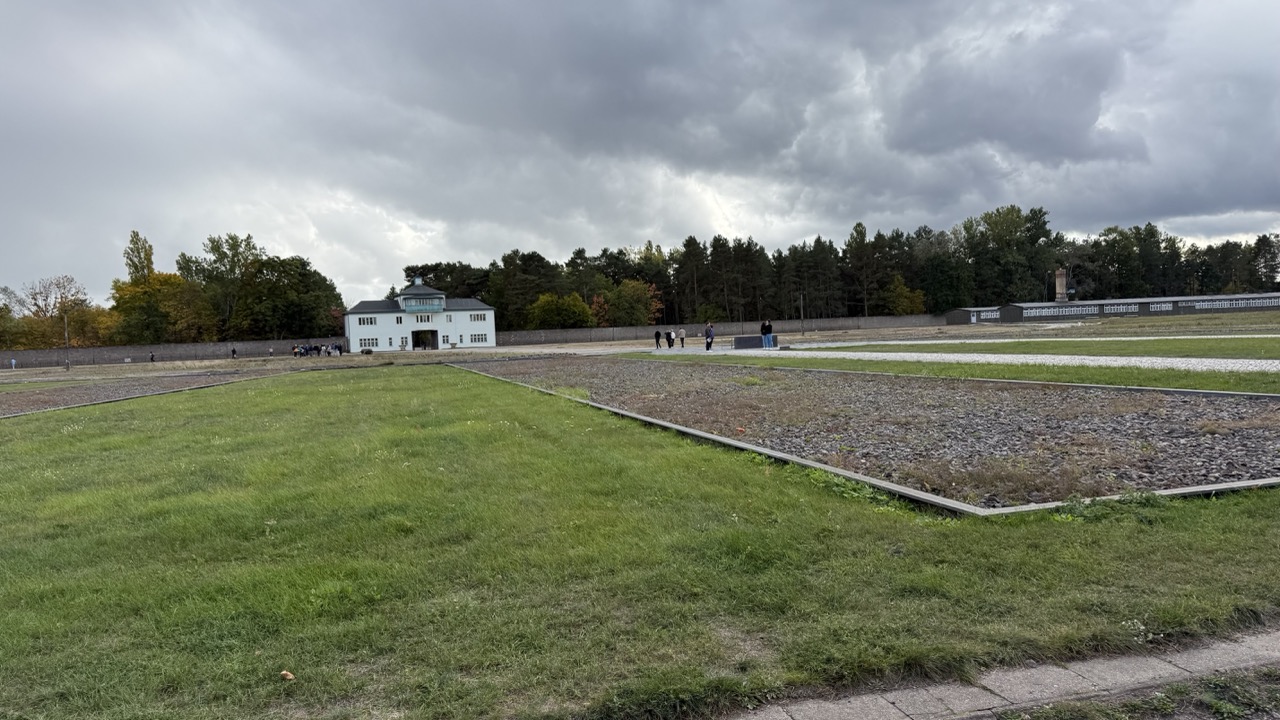
We spent much of our day at Sachsenhausen, a concentration camp that opened in 1936, the same year Berlin hosted the Olympic Games. Because the Nazis wanted to present an image of prosperity and greatness as they welcomed the world to Germany, they “cleansed” the city by removing homeless people, those with addictions, and Jews by transporting them to Sachsenhausen.
This camp became a model for all future concentration camps. Architects designed the buildings. Engineers and other specialists created systems of imprisonment, forced labor, and murder. These were educated people. People with families, feelings, ambitions, and lives outside their work. People who considered themselves civilized and human.
And yet, they participated in the systematic destruction of other human beings. And, there was quite a system.
How do we begin to understand that?
We also explored the complicated role of the Kapos, prisoners who were given authority by the SS to supervise and control other prisoners, sometimes through brutal punishment. These were people who were themselves imprisoned, yet were placed in positions where their own survival could become dependent on the suffering of others.
Imagine having to look another prisoner, someone just like you, in the eyes and make a choice that would cause deep suffering. What happens to our humanity under those circumstances? How far can a person be pushed before survival begins to outweigh everything they once believed about themselves?
There is no answer.
Throughout the day, we kept returning to the idea of complexity. We want to understand why people did these things. We want explanations that make sense of the cruelty. We want to believe there is a clear line separating those who commit terrible acts from those who, on the flip side, felt compelled to help.
But perhaps that desire for a simple explanation is part of what makes this history so difficult to confront, or, easy to avoid.
After leaving Sachsenhausen, we traveled to the center of Berlin. On May 10, 1933, Nazi students and supporters burned approximately 20,000 books there, including works by Jewish authors and those whose ideas challenged Nazi ideology.
Julian pointed out that the book burning took place directly across from Humboldt University’s law school. A place dedicated to scholarship, intellectual inquiry, and the pursuit of justice.
How could educated minds, people who studied law, participate in or stand by as books were burned? Books! Tools of learning?!?!? How could people devoted to knowledge become part of a movement determined to silence ideas?
Today, an art installation called the Empty Library sits on the ground in the square. Through a glass panel in the pavement, you can see rows of empty white bookshelves representing the books that were destroyed.
Julian pointed out that this small, almost unnoticeable piece of art sits, between a magnificent opera house and that same university law building. It is surrounded by institutions that represent culture, education, beauty, and intellectual achievement.
The juxtaposition is impossible to ignore.
We often assume that education makes us wiser, that culture makes us more compassionate, and that knowledge makes us more human. But does it?
Yesterday, I reflected on the importance of allowing ourselves to sit with discomfort rather than trying to escape it. Today, I began to understand that perhaps discomfort is not simply something we must endure when confronting difficult history. Perhaps it is something we must learn to value and wrestle with.
I left today with far more questions than answers.
How could ordinary people participate in extraordinary cruelty? What would I have done in their place? Would I have had the courage to resist? Would I have taken a job as a Kapo and justified it somehow? Would I have protected or punished someone else at the risk of my own life or the lives of my husband or my children? Would I have recognized what was happening before it was too late?
I want to believe I know the answers to those questions.
But I don’t.
And perhaps the most important thing I can take away from today is the humility to admit that.
It is easy to look back at history with the certainty of knowing how it ended. It is much harder to recognize that the people living through it did not have that perspective, and that the choices we make in our own lives are rarely accompanied by such clarity.
Maybe the purpose of visiting these places isn’t to leave with answers. Maybe it is to leave with more questions. Better questions. Questions that unsettle us, challenge our thinking, and force us to examine but our own choices.