2026 Annual Kristallnacht Commemoration Teacher Workshop
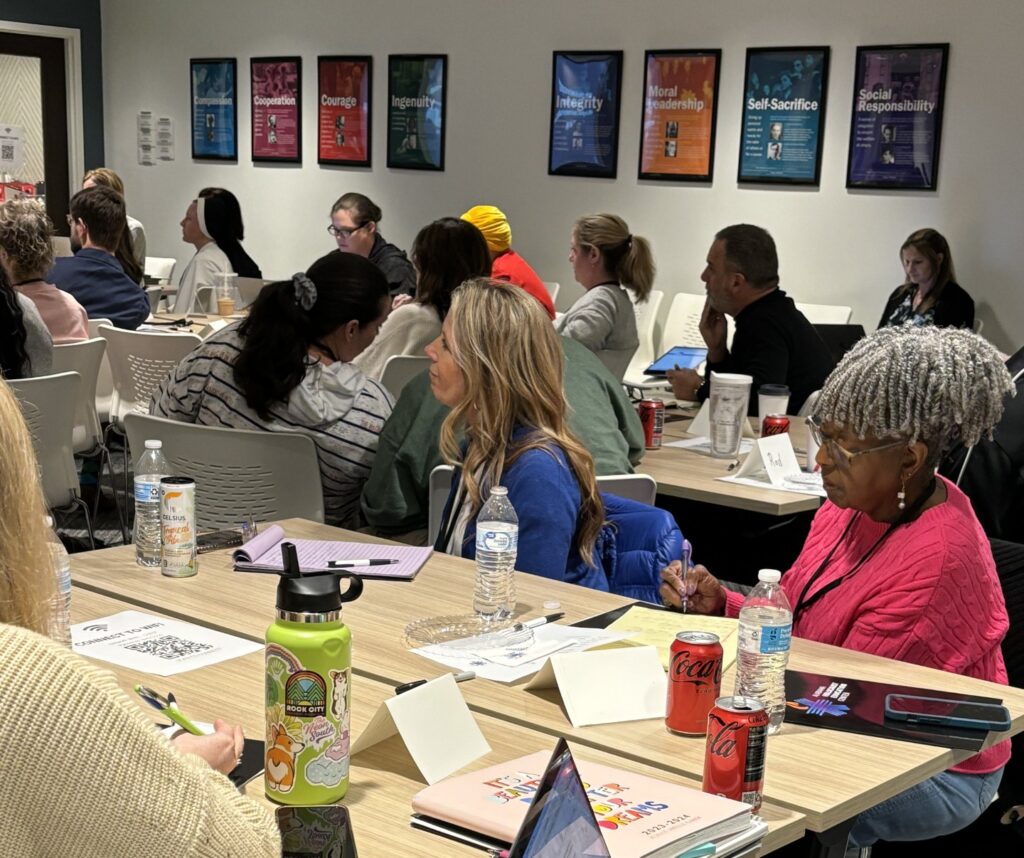
About the Event
- Time: 8:30 AM – 3:00 PM
- FREE to attend (no cost)
- Registration Required
- Substitute Teacher Reimbursement: Up to $125
- Lunch Provided
- Certificate of Completion with 5 hours PD credit (available on PowerSchool)
Session One: Holocaust Diary Writing as a Literary and Historical Phenomenon
Led by Dr. Alexandra Garbarini
This session will explore critical methods of reading and analyzing Holocaust diaries. Read in its entirety or in excerpts, diaries are rich and complex texts. This session seeks to introduce historically-minded questions relating to Holocaust diaries that have relevance for canonical texts like the diary of Anne Frank and lesser-known but no less historically significant diaries accessible in published English translations.
Diaries as a Window on Different Jewish Victims’ Holocaust Experiences
Jewish men, women, and children kept diaries across Europe, and the diaries they recorded reveal different aspects of the history of the Holocaust. In this session, we will use three individuals’ diaries to examine distinct contexts of the Holocaust. The session aims to broaden participants’ historical understanding and familiarity with using diaries as historical sources.
Session Two: Diaries and Critical Empathy for Historical Actors
Led by Dr. Alexandra Garbarini
Diaries are contemporaneous documents, unfolding in “real time.” Unlike memoirs or oral histories recorded after the war, diaries capture the perspectives of people who did not know the end of the history they were living through. This session explores what it means to study history from the perspectives of the people who lived through it. With a focus on the period following Kristallnacht, we will discuss diaries alongside other types of texts Jews produced contemporaneously with their persecution, including letters, reports, and newspaper accounts.
Session Three: Historical Antisemitism and the Dehumanization of Jews in Nazi Germany
Led by Dr. Jonathan Wiesen
This session explores some of the recurring antisemitic myths throughout Western history. What were Jews accused of, and why did scapegoating this small minority in Europe serve so many political, economic, and religious purposes? The session then turns to how the Nazis used some of these old lies, added new ones, and deployed them in their anti-Jewish propaganda in order to dehumanize what they saw as a dangerous “race.”
Session Four: The Establishment and Operation of Ghettos
Led by Dr. Dan J. Puckett
This session examines the establishment and operation of ghettos under Nazi rule, exploring why the Nazis created ghettos and how they were used as a tool of persecution, control, isolation, and exploitation. Participants will examine the realities of daily life for Jews living in ghettos, including overcrowding, hunger, forced labor, disease, family life, education, religion, and cultural and spiritual life.
Presented by:

Location
- Alabama Holocaust Education Center
- 2100 Highland Avenue South, Suite 101 Birmingham, AL 35205
Program Date and Time:
Event Location:
Share this event
About the Speakers
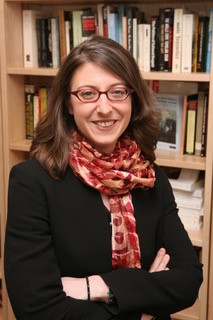
Dr. Alexandra Garbarini
Alexandra Garbarini is Hans W. Gatzke ’38 Professor of History and Jewish Studies at Williams College, in the United States. Her research brings together the history of the Holocaust, genocide, and mass violence; the interdisciplinary study of autobiographical sources, specifically, testimony, diaries and letters; and the history of historiography. She is the author of Numbered Days: Diary Writing and the Holocaust (Yale University Press, 2006; National Jewish Book Award finalist), and co-author of Jewish Responses to Persecution, volume 2, 1939-1940 (Rowman & Littlefield, in association with the United States Holocaust Memorial Museum, 2011). In addition to articles and reviews, she has co-edited several volumes, including a special issue of the journal Etudes Arméniennes Contemporaines on “Victim Testimony and Mass Violence” (2015); Lessons and Legacies, vol. XIII, New Approaches to an Integrated History of the Holocaust: Social History, Representation, Theory (Northwestern University Press, 2018); and ‘A Terrible and Terribly Interesting Epoch’: The Holocaust Diary of Lucien Dreyfus (Rowman & Littlefield, in association with the United States Holocaust Memorial Museum, 2021). Her work has been supported by grants from the Fulbright Program, the DAAD, the Mellon Foundation, the United States Holocaust Memorial Museum, the American Philosophical Society, and the Memorial Foundation for Jewish Culture. She is currently writing a new book about victim testimony to mass violence and genocide from the Armenian genocide to the Holocaust, tentatively titled, Atrocities’ Truth Tellers: Testimony before the Holocaust. Garbarini serves on the Academic Council of the United States Holocaust Memorial Museum.
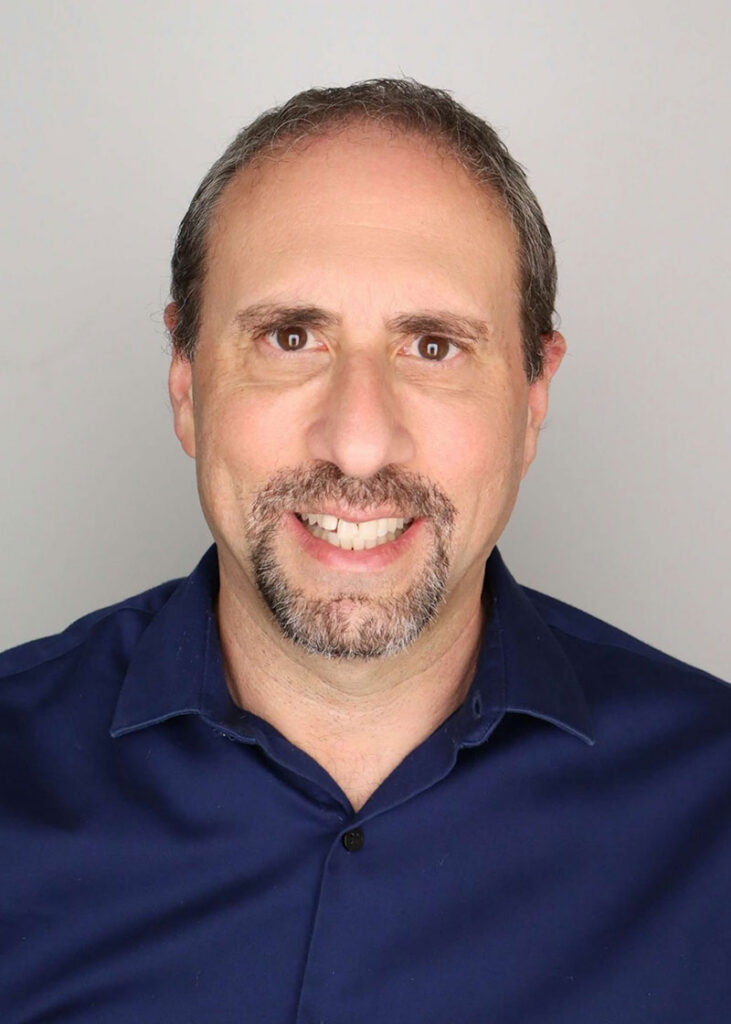
Dr. Jonathan Wiesen
Dr. Jonathan Wiesen is Professor of History at the University of Alabama at Birmingham. He is the author of West German Industry and the Challenge of the Nazi Past, 1945-1955 (2001), which won a book prize from the Hagley Museum and Library and the Business History Conference. He is also editor with Pamela Swett and Jonathan Zatlin of Selling Modernity: Advertising in Twentieth Century Germany (2007) and author of Creating the Nazi Marketplace: Commerce and Consumption in the Third Reich (2011) and coauthor of Nazi Germany: Society Culture, and Politics (2024). His work has appeared in a number of scholarly journals, including Central European History, Holocaust and Genocide Studies, Journal of Contemporary History, and the German Studies Review. His forthcoming book, Jim Crow in Berlin: Modern Germany and US Race Relations will be published by Cornell University Press in December of 2026
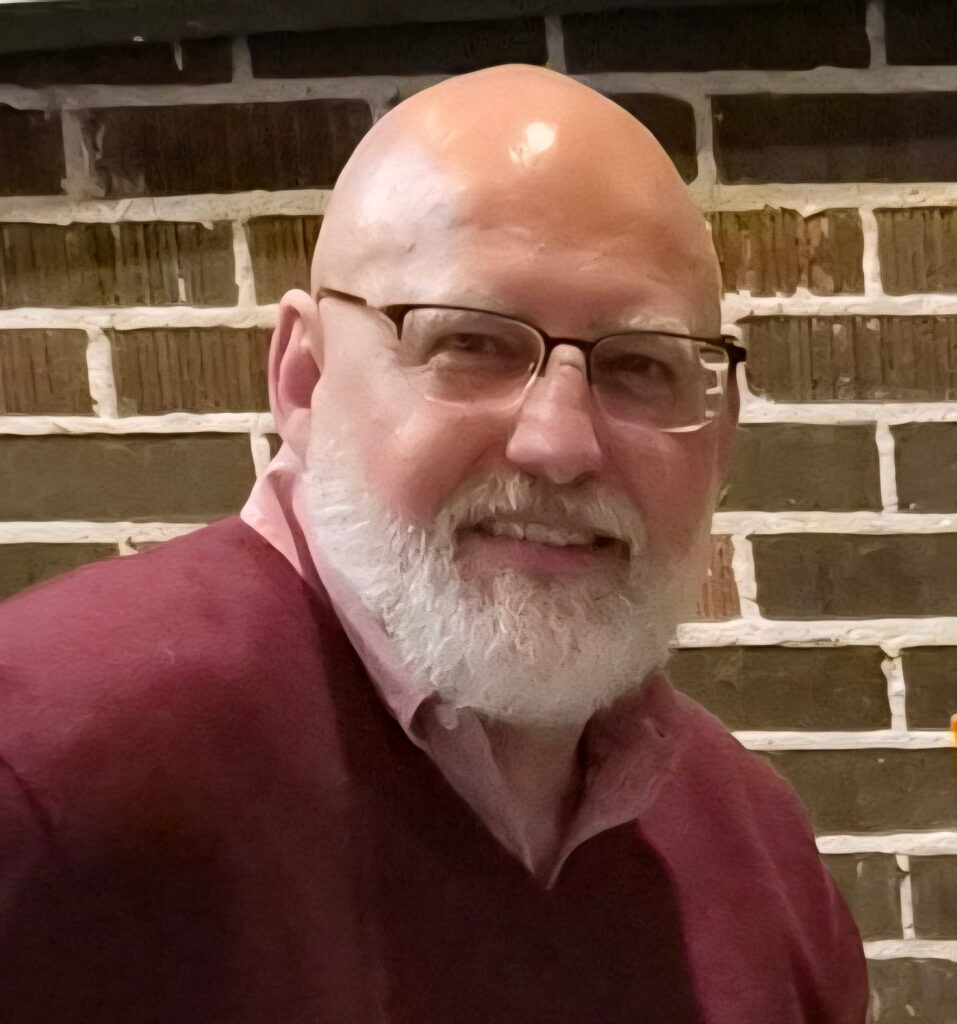
Dr. Dan J. Puckett
Dr. Dan J. Puckett is a professor of history at Troy University and for the past 11 years has served as the Chair of the Alabama Holocaust Commission. He received his Ph.D. at Mississippi State University and is the author of In the Shadow of Hitler: Alabama’s Jews, the Second World War, and the Holocaust, published by the University of Alabama Press.
He has written widely on the Holocaust, Southern Jews, and Alabama history. His work has appeared in publications such as Holocaust and Genocide Studies, Alabama Heritage, and Southern Jewish History. He is currently working on a study of African American responses to the Holocaust and its impact on civil rights.
As a distinguished historian and an expert on the Holocaust, Dr. Puckett has lectured across the country on the American and southern responses to the Holocaust.
He currently serves on the Board of Directors of the Association of Holocaust Organizations and will serve as the vice president/president-elect of the Alabama Historical Association in 2026. He has been president of the Troy University Faculty, a past president of the Southern Jewish Historical Society, and has previously served on the Board of Directors for the Alabama Historical Association and the Association of Alabama Historians. He has held the Starkoff Fellowship and the Rabbi Theodore S. Levy Tribute Fellowship at the Jacob Rader Marcus Center of the American Jewish Archives.