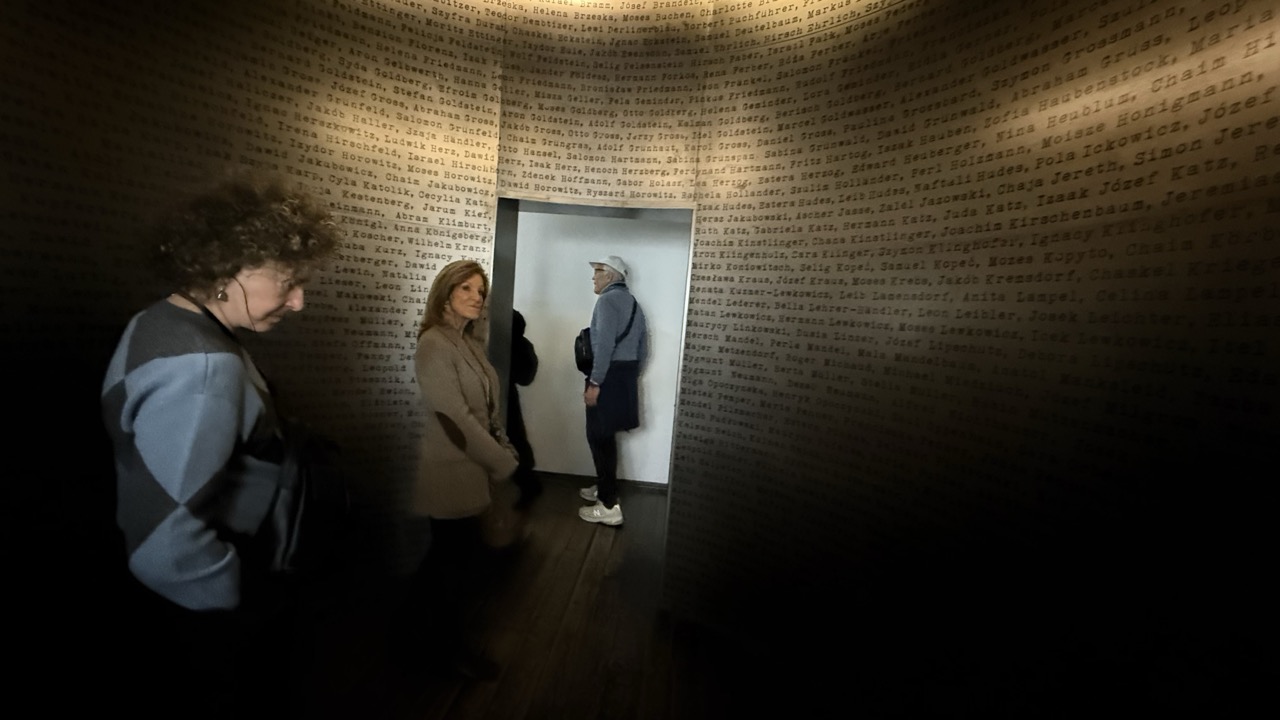
Today, we visited the former Jewish Ghetto in Kraków, the Eagle Pharmacy, and Oskar Schindler’s Factory. It was an emotionally difficult day, continuing to see both the unimaginable cruelty of the Holocaust and the extraordinary courage of those who chose to resist it.
What struck me today were two very different men, and the choices they made.
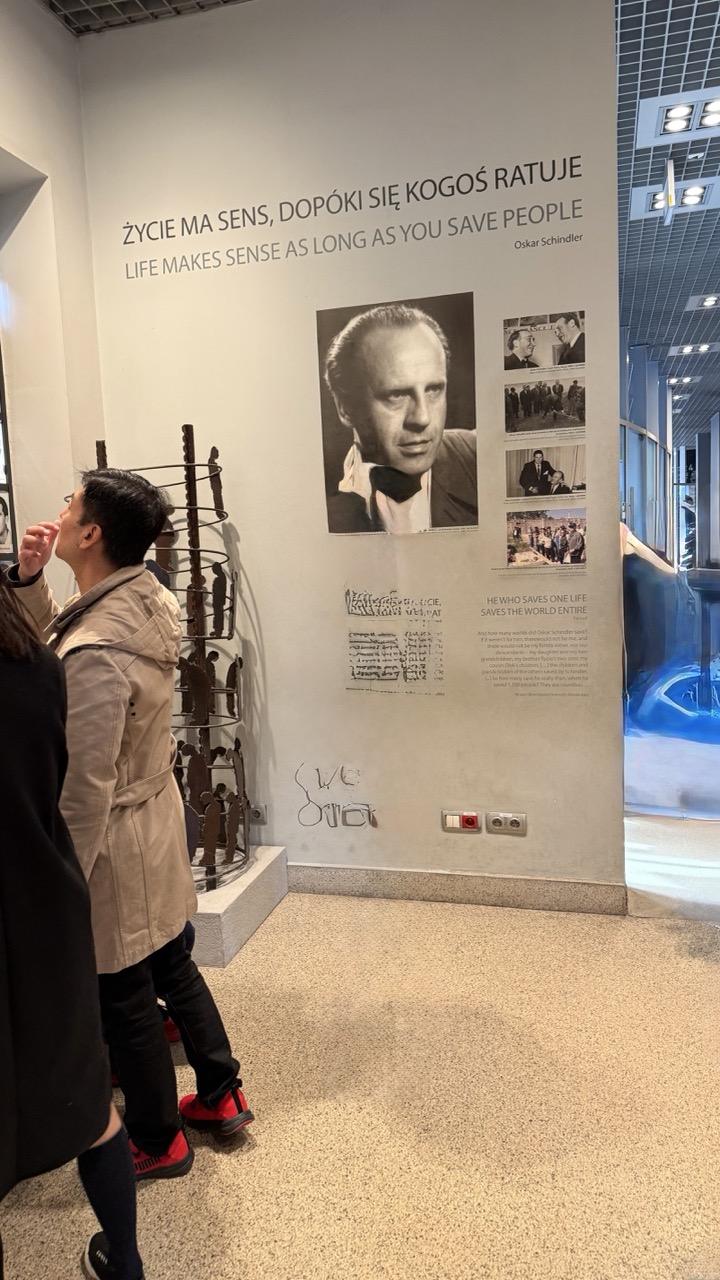
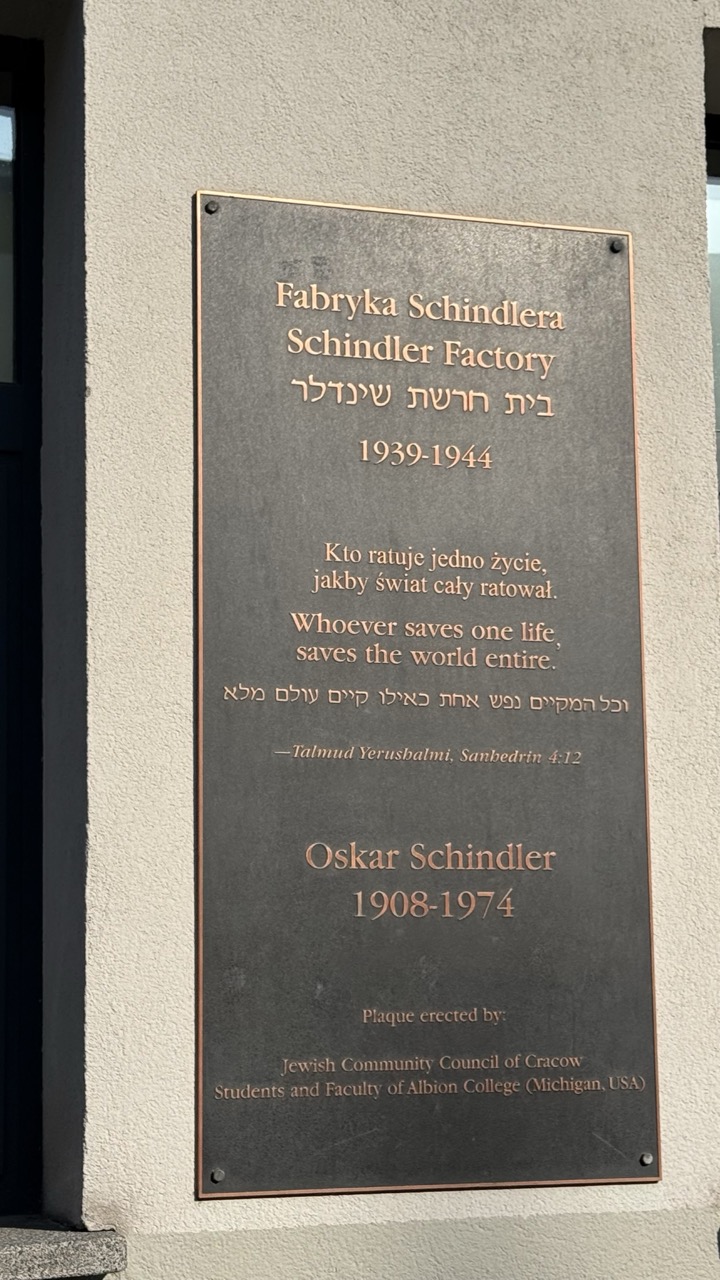
Oskar Schindler did not begin as a hero. He was a member of the Nazi Party, an opportunist who saw the war as a chance to make money by exploiting free Jewish labor. But as he witnessed the atrocities unfolding around him, something changed. He began to recognize the humanity of the very people he had once viewed as a means to profit. And ultimately, he risked his fortune, his position, and his life to save more than 1,000 Jews.
What I find so extraordinary about Schindler is not that he was a good man from the beginning. He wasn’t.
It’s that he changed.
His story doesn’t erase his earlier choices, but it raises a profound question about our capacity to confront our own complicity and become something different.
Before our trip, Ron and I re-watched Schindler’s List, and I was deeply moved by the relationship between Schindler and Itzhak Stern, his Jewish accountant. Near the end of the film, Schindler breaks down, devastated by the thought that he could have saved more people. And it is Stern, a man who had endured unimaginable suffering, who comforts him.
The complexity of that moment has stayed with me. Grief, gratitude, compassion, and the terrible weight of all the lives that could not be saved.
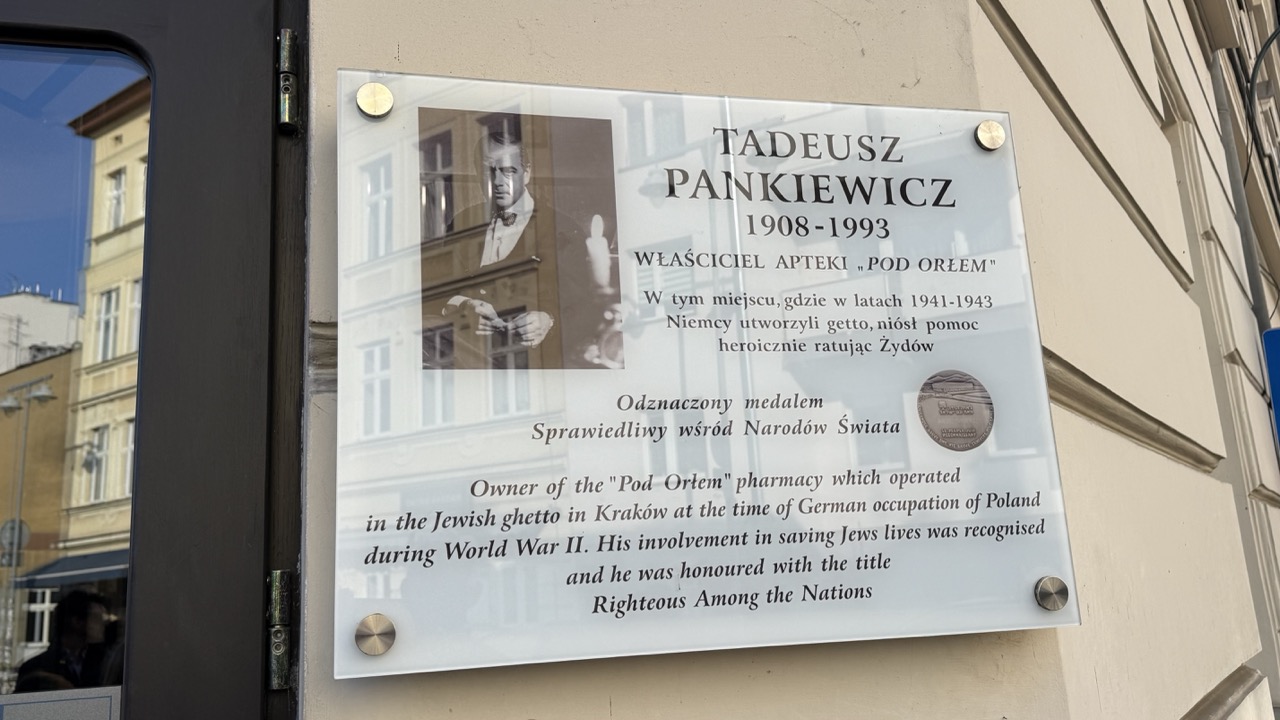
Then there was Tadeusz Pankiewicz, the Polish Catholic pharmacist who operated the Eagle Pharmacy inside the ghetto.
Unlike Schindler, Pankiewicz did not need to undergo a transformation. He had the opportunity to leave the ghetto, but chose to stay.
He and his staff provided medicine, shelter, food, and information to Jewish residents, often at great personal risk. We learned that they even supplied sedatives to help keep children quiet while hiding from Nazi soldiers. The thought of a mother having to silence her frightened child to keep that child alive is almost unbearable.
Pankiewicz could have walked away from the suffering around him. Instead, he chose to put himself in danger, again and again, to protect people.
That is not ordinary kindness. It is extraordinary moral courage.
As I reflect on today, I keep coming back to the choices people made. Some participated in the cruelty.
Some looked away.
Others risked everything to resist it and do something.
Schindler and Pankiewicz arrived at their courage from very different places. One had to confront what he had become. The other refused to abandon his neighbors when doing so would have been far safer.
Neither could stop the cruelty of the Holocaust. But both refused, in their own ways, to accept that they were powerless to act.
I was left thinking about how much courage it took to make those choices, how many lives depended on them, and how terribly different the world might have been if more people had done the same.
And, again, I continue to wonder: what would I have done?