What do you do when there is no good choice? When every decision has consequences, and saving one life might mean sacrificing another?
Today was about dilemmas. Not the everyday dilemmas we all face, but impossible moral choices made under circumstances most of us cannot begin to comprehend. It was also about dialogue, remembrance, faith, and the responsibility we have to confront difficult questions rather than look away.
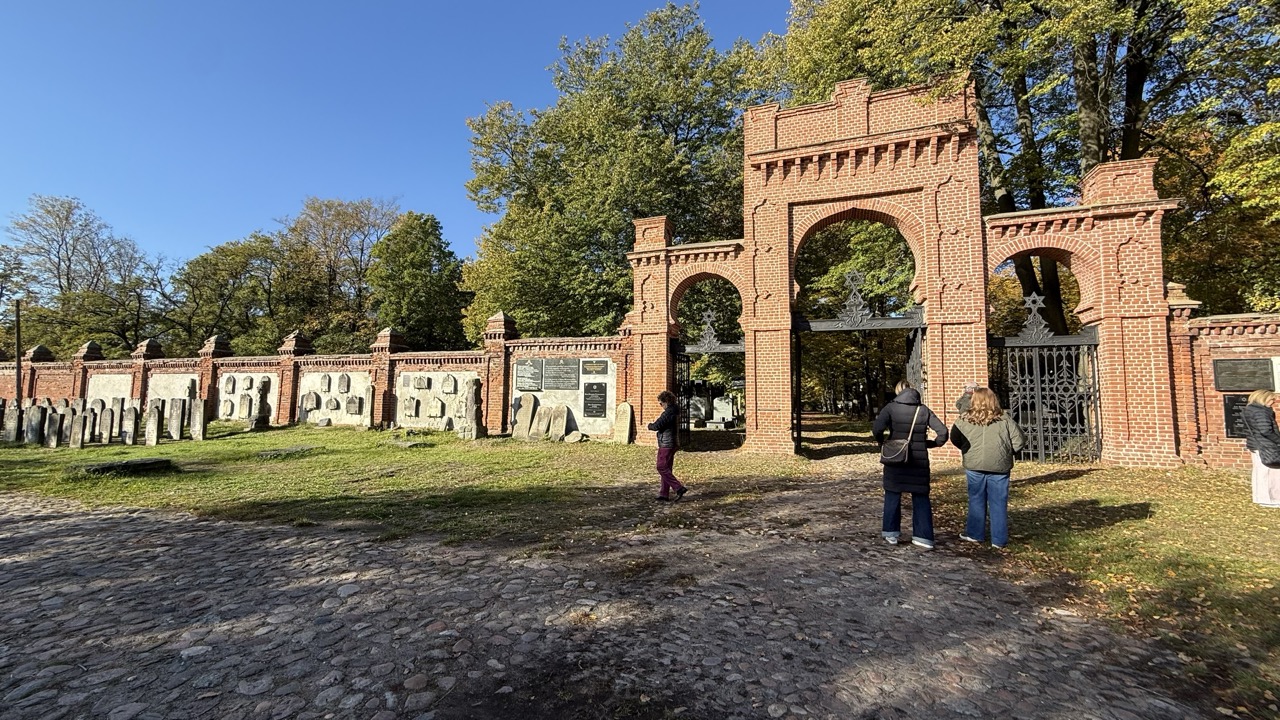
Our morning began in Łódź (pronounced roughly “Woodge”), where we visited the Łódź Jewish Cemetery, one of the largest Jewish cemeteries in Europe, with approximately 160,000 graves.
Nearby was the Łódź Ghetto, where more than 200,000 Jews, Roma, and Sinti people were imprisoned and persecuted.
What made this cemetery different from so many of the places we have visited was that people were actually buried here. This was not an extermination camp or a mass killing site. Yet the cemetery showcases the devastating conditions of ghetto life. Thousands died from starvation and disease, and many were buried in the cemetery’s section known as the Ghetto Field.
Several members of our group had relatives who lived in or around Łódź. Michael Sznajderman and Alan Sunshine shared extraordinary stories of survival within their families. Hearing these stories in the very place where their history unfolded made the experience deeply personal. These were not just historical events or statistics. These were people’s parents, grandparents, siblings, and children.
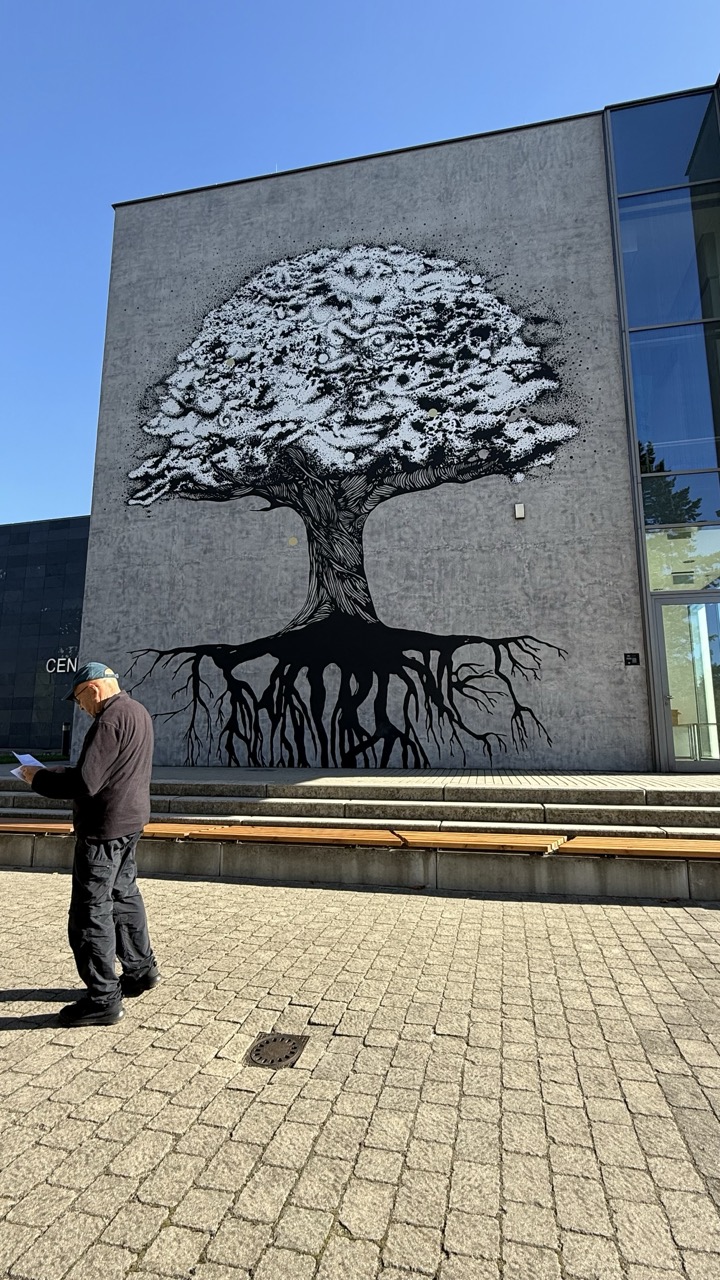
From there, we traveled to the Marek Edelman Center for Dialogue, where we learned about one of the most complicated and controversial figures of the Holocaust: Chaim Rumkowski.
Rumkowski was the head of the Jewish Council, or Judenrat, in the Łódź Ghetto. The Nazis placed Jewish Councils in the position of administering ghettos and carrying out German orders. This created unimaginable moral dilemmas for Jewish leaders, who had to make decisions while operating under the constant threat of the Nazis.
Rumkowski believed that making the ghetto economically valuable to the Nazis might be the best way to keep its inhabitants alive. His strategy was to turn the ghetto into a place where Jews would work in exchange for food, giving them a greater chance of survival.
But there was a terrible dilemma with this strategy.
What would happen to the people who cannot work?
The elderly? The sick? The disabled?
The children?
If the Nazis valued the ghetto primarily for its labor, those unable to work became increasingly vulnerable.
Rumkowski believed that by cooperating with Nazi demands, he might be able to save at least some of the population. But cooperation also meant participating in decisions that would send others to their deaths.
In September 1942, the Nazis demanded the deportation of thousands of Jews from the ghetto, including young children, the elderly, and the sick. The Jewish Council was forced to confront the horrifying task of implementing these demands.
On September 4, Rumkowski delivered what became one of the most infamous speeches of the Holocaust, called “Give Me Your Children.”
He pleaded with parents to surrender their young children, arguing that sacrificing some might make it possible to save others.
Can you imagine being a parent hearing those words?
Can you imagine having more than one child and being told that one might be taken while another could remain?
How could any parent make such a choice?
How could any leader ask them to?
The children who were deported were sent to their deaths. And yet Rumkowski believed that his strategy could preserve the lives of others.
So how do we judge him?
Was he a leader trying desperately to save as many people as possible? Was he a collaborator who became complicit in the Nazi machine of murder? Was he both?
Earlier in our journey, we discussed the Jewish prisoners known as Kapos, who were placed in positions of authority within the concentration camps. Their stories raised similarly uncomfortable questions about coercion, survival, power, and responsibility.
What struck me today is how easy it is to judge something when we already know the outcome. We know what happened. We know that the Nazis were not negotiating in good faith. We know that the promises of survival were often delusional dreams.
But the people living through those moments did not have the benefit of hindsight.
That does not mean every decision was justified. But it does mean that understanding circumstances is essential before passing judgment.
And we have to realize it was the Nazis who created these impossible choices. They designed a system in which victims were forced into conflict with one another, where survival could depend on another person’s suffering.
That really hit me.
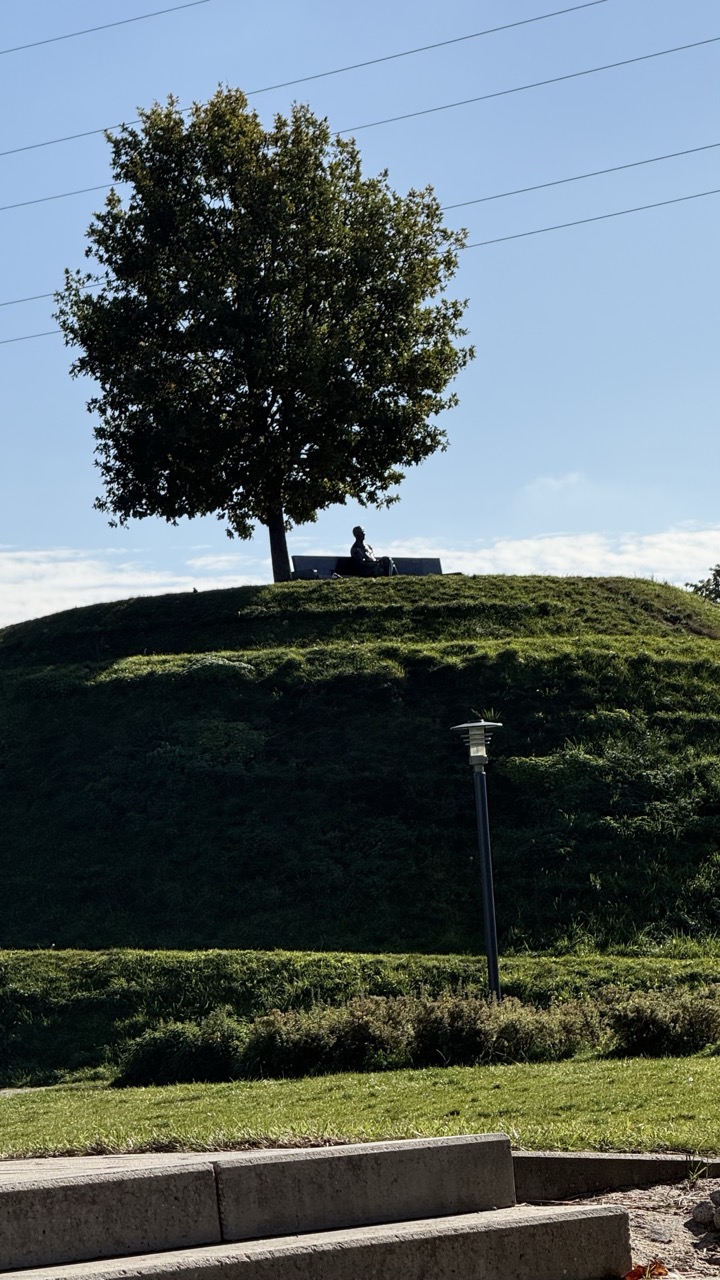
While at the Marek Edelman Center for Dialogue, we also visited Survivors’ Park, a beautiful space dreamed and designed by Halina Elczewska, a Survivor of the Łódź Ghetto.
Trees have been planted to honor Holocaust Survivors, transforming a place associated with so much suffering into one of remembrance, reflection, and life.
The Nazis sought to destroy not only individuals, but entire families, communities, and futures. Yet here, decades later, trees continue to grow. People gather. They visit with their dogs. Stories are told. Children can learn what happened.
It is a reminder that remembrance is not simply about looking backward. It is also about what we choose to nurture for the future.
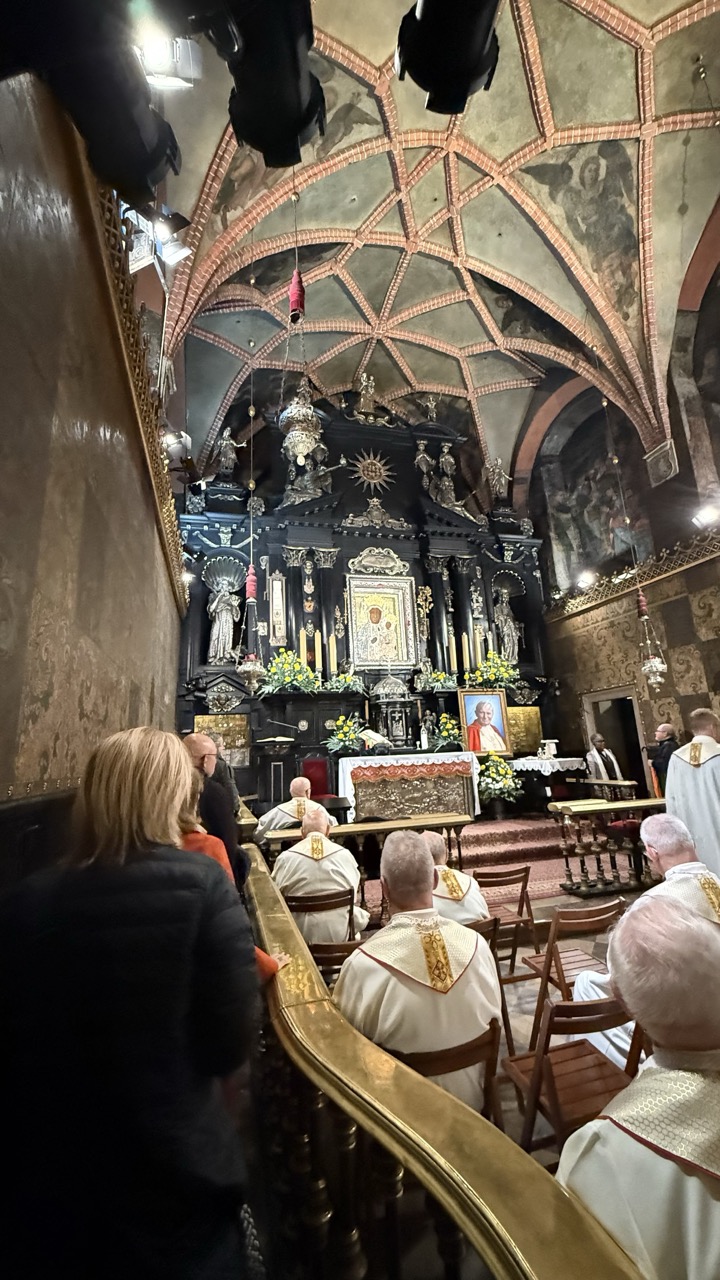
Our final stop took us to Częstochowa and the Jasna Góra Monastery, one of the most important religious sites in Poland. Founded in 1382, this historic Pauline monastery is home to the Black Madonna of Częstochowa, a sacred image of the Virgin Mary and one of the most revered symbols of Polish Catholicism. For centuries, millions of pilgrims have come here seeking hope, protection, and spiritual strength.
At first, the transition from the Łódź Ghetto to this magnificent religious sanctuary seemed like a dramatic change in our day. But the more I thought about it, the more I realized that the two visits were connected by the same difficult questions.
What does faith demand of us when confronted with evil? And what responsibility do religious leaders and institutions have when the lives of others are at stake?
The history of the Catholic Church during the Holocaust is complicated. There were priests, nuns, and ordinary Catholics who risked their lives to shelter Jews, forge documents, and resist Nazi persecution. Some paid for those acts of courage with their own lives.
There were also members of the Church who remained silent, were antisemitic, or failed to challenge the persecution of their Jewish neighbors.
This raises some important questions.
When does compromise become complicity? When does silence become a choice? What does courage look like when speaking out may put others, as well as ourselves, in danger?
How do we reconcile the ideals of our faith, our values, and our humanity with the actions we take when those ideals are tested?
I left Jasna Góra thinking that the most difficult part of studying the Holocaust is not simply learning what happened. It is confronting what this history teaches us.
We want to believe that we would have made the right decisions. That we would have protected the vulnerable, spoken out against injustice, and refused to participate in evil.
But the stories remind us that moral courage is much easier to admire in hindsight.
Perhaps the greatest danger is believing that we would never face such dilemmas ourselves.
I certainly hope (pray) that most of us will never encounter choices as horrific as those imposed on the people of the Łódź Ghetto. But we do face moments when our values are tested. When remaining silent is easier than speaking up. When protecting ourselves is more comfortable than standing beside someone who is vulnerable. When doing the right thing comes with a personal cost.
The cemetery reminded us of the lives that were lost. The stories of Survivors reminded us of the lives that endured. The trees in Survivors’ Park reminded us that remembrance can give rise to new life. And the monastery reminded us that faith and moral conviction must ultimately be measured not only by what we believe, but by how we act.
We cannot change the impossible choices that people were forced to make during the Holocaust. But we can look closely the choices we make today.
When the moment comes to choose between what is easy and what is right, will we have the courage to act?