Our day began with a visit to the small town of Tykocin, home to a thriving Jewish community before the Holocaust. At the heart of that community stood a beautiful synagogue that served three purposes: gathering, learning, and praying. It was a place where everyone was welcome, Jewish or not. A place filled with life, faith, and community.
And then the Nazis came.
The Jewish residents were forced from their homes and marched into a nearby forest, where they were murdered and buried in mass graves. In a matter of hours, generations of families, traditions, and history were wiped away. The synagogue was desecrated, and the Jewish community that had once filled it with life was gone.
Gone.
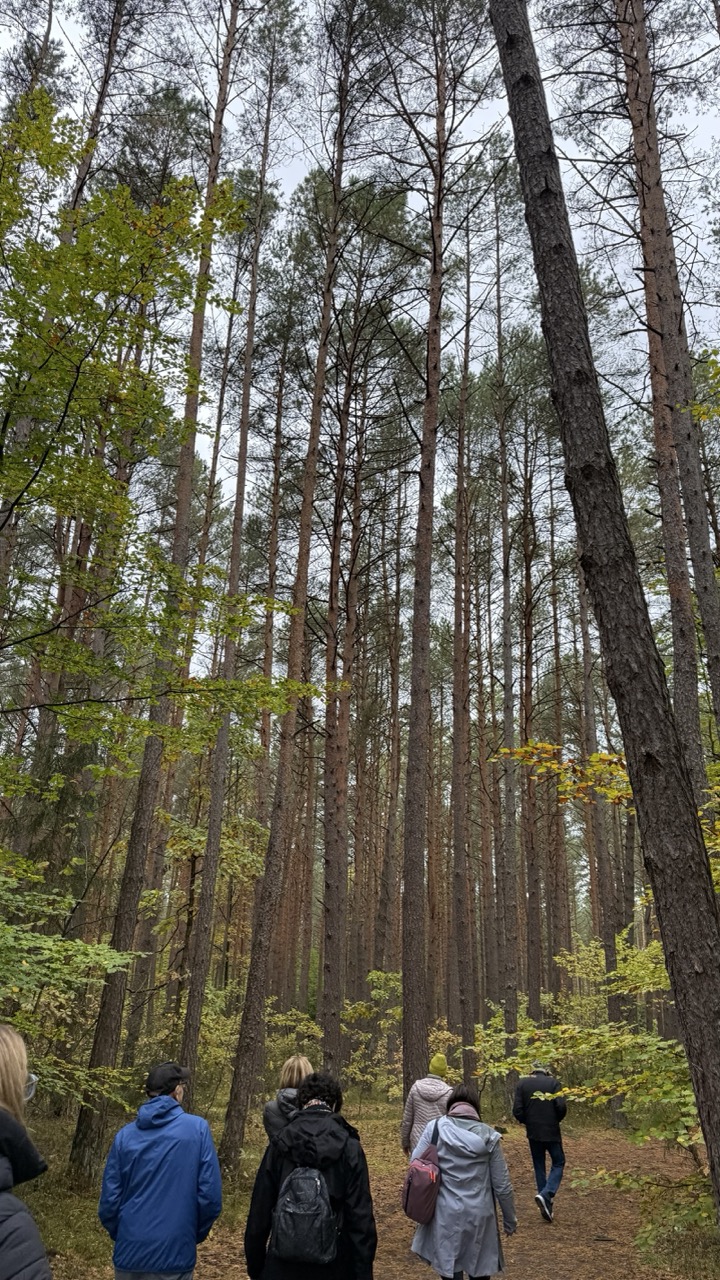
We walked through that same forest to visit the memorial honoring those who were murdered.
There, we heard a story that I will never forget.
A young boy had somehow escaped the massacre, but not before witnessing the murder of his parents and five siblings. He survived, eventually finding himself in an orphanage where he was raised Catholic and grew up to be a Priest.
Years later, through an extraordinary chance encounter, Julian met this man. By then, the priest had been diagnosed with cancer and was making plans for his final resting place. His wish was to be buried near the mass grave where his family lay.
This little boy had lived an entire lifetime carrying the memory of what he witnessed and the family he lost. Yet, he found a way to build a life. He found faith. He devoted himself to serving others while never letting the connection to his family fade.
The complexity of holding multiple emotions at the same time was there again. This story is profoundly beautiful and heartbreaking all at the same time.
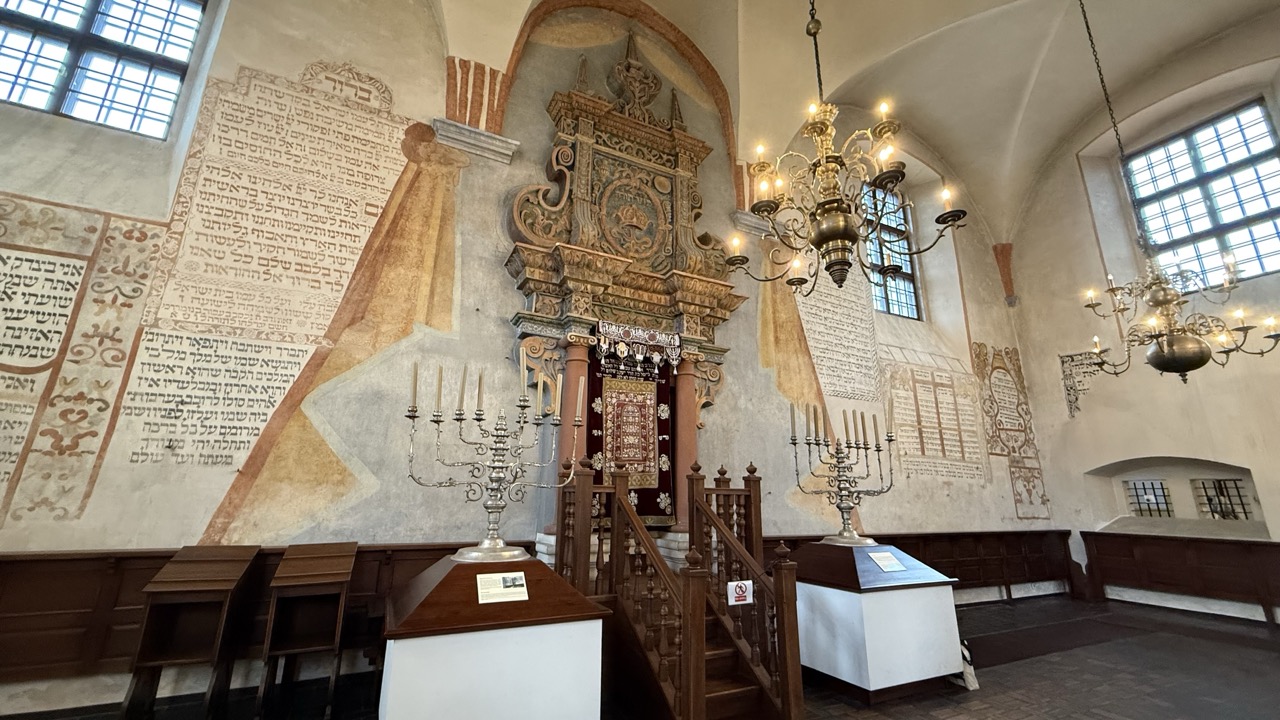
After the war, the synagogue was restored. Because the prayer books had been destroyed, the prayers were written directly onto the walls. Standing in that beautiful space, I was struck by the symbolism. The Nazis had tried to erase an entire people, their faith, and their traditions. Yet here were their prayers, literally written on the walls with awesome beauty, refusing to disappear.
The Nazis destroyed books. Buildings. Lives. But they did not destroy spirit.
From Tykocin, we traveled to Treblinka.
Treblinka was a Nazi extermination camp where more than 900,000 people were murdered in a little over a year. It is a number so enormous that it is almost impossible to comprehend.
Jeffrey Bayer eloquently put it into perspective. He reminded us that the metro Birmingham area has a population of just over one million people.
Imagine Birmingham. Every neighborhood. Every school. Every family. Every friend. Every person you pass on the street.
Murdered.
Not because of a natural disaster. Not because of a crime or something they had done. But simply because of who they were.
That comparison hit me hard. Suddenly, 900,000 wasn’t just a number. It was an entire world of people, each with a name, a family, a story, and a future that was stolen.
Treblinka is hidden deep within a forest. To reach the memorial, we walked along a cobblestone path. The stones were uneven, different shapes and sizes, making it easy to stumble or twist an ankle.
As I walked, I couldn’t help but think about the symbolism of that path. Every uncomfortable step made me think about the people who had been brought here, frightened, exhausted, and unaware of just how close they were to the end of their lives.
The fear they must have felt made my stomach turn over.
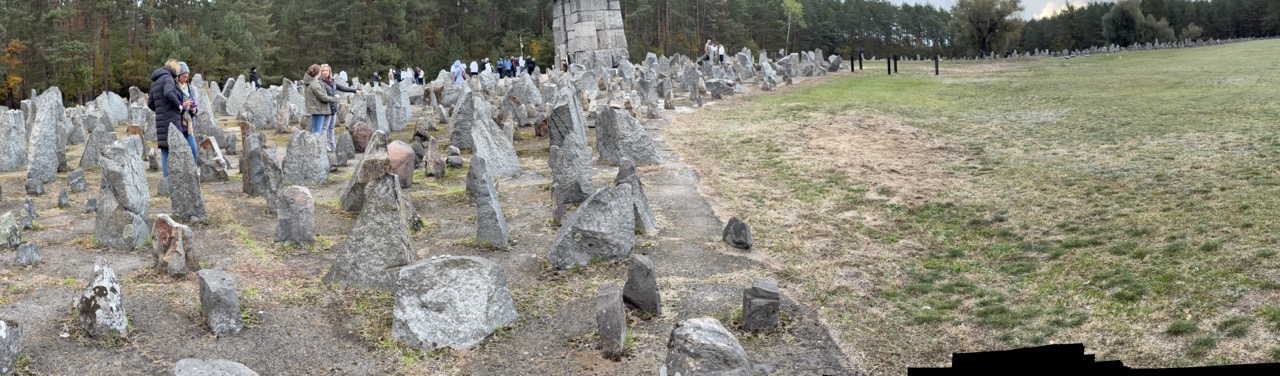
And then we reached the memorial.
It was eerily quiet. Almost peaceful.
How could a place where so much suffering and evil had occurred feel so peaceful?
I stood over the mass grave and vast open area of memorial stones with Abby and I cried. We stood together, as our own little community and supported each other.
I stood there trying to make sense of this contradiction. The forest was still. The air was calm. There were no sounds that could begin to tell the story of what had happened on that ground.
And yet, somehow, the silence at Treblinka screamed louder than any voices could.
Were people who had been murdered finally at peace?
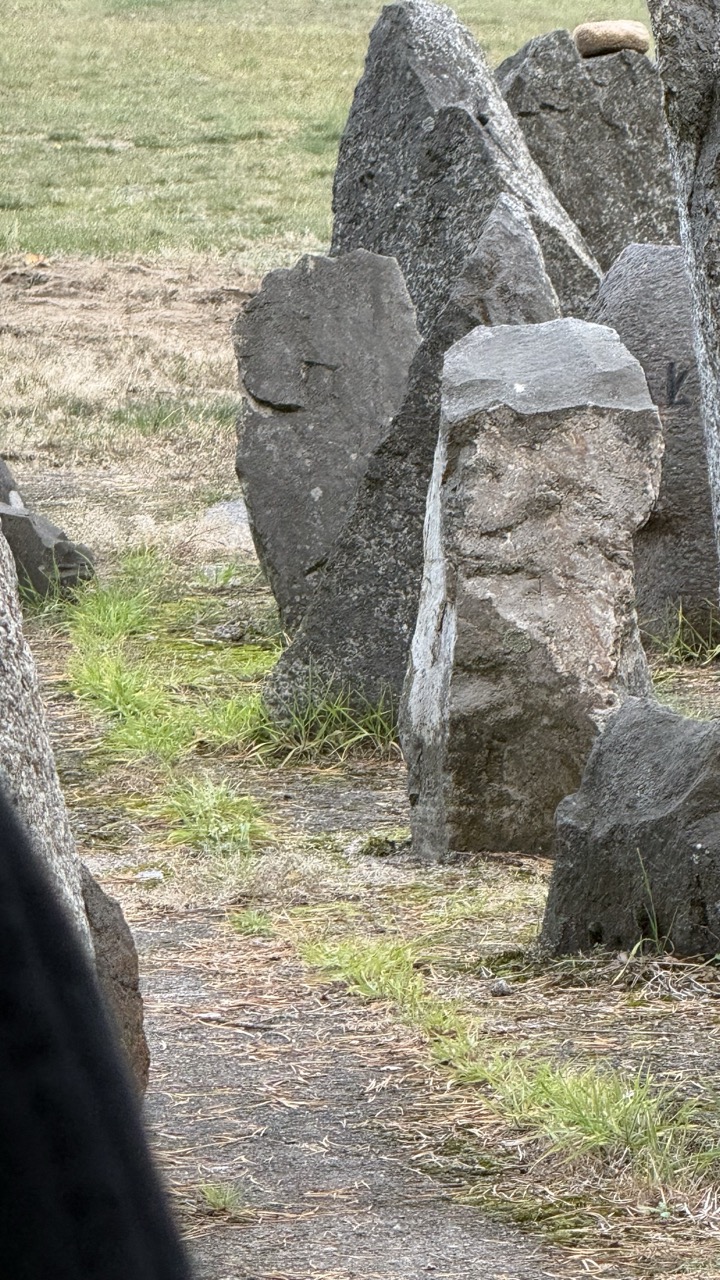
As I looked across the memorial stones, one in particular caught my attention. In its markings, I could almost make out the image of a man’s face. I felt as though he was looking directly at me.
Speaking directly to me.
He was telling me that there was peace.
Because we were there.
Because we were remembering.
Because we were standing on that ground acknowledging what happened, honoring those who were murdered, and making a promise that their stories would not be forgotten.
I arrived at Treblinka thinking about the unimaginable number of lives lost. I left thinking about the responsibility I carry, not only in my role as CEO of a Holocaust organization, but because of who I am.
We cannot change what happened in that forest. We cannot bring back the families, the children, or the generations that never had a chance to live.
But we can remember them.
We can tell their stories.
We can refuse to let the world forget.
I left believing, in some small way, our presence gave, and will continue to give, a voice to those whose voices were stolen.
As we got on the very quiet bus to leave, I felt myself feeling things a bit deeper. Simply wanting to love more. I know this will guide me from now on as I will do my best to remember their spirit.